Showing posts with label entrepreneurship. Show all posts

Tuesday, July 29, 2014

YALI 2014

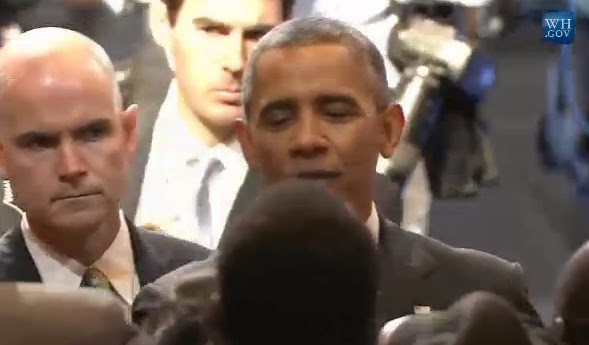
The Young African Leaders Initiative 2014 - #YALI2014 kicked off this week in Washington DC. Speaking at a meeting with 500 of the first class of YALI fellows, President Obama said that it will be renamed the Mandela Washington Fellowship (& doubled to have 1,000 fellows by 2016) and that four regional leadership centers would set up in Africa.

The regional leadership centers will be established in Senegal, Ghana, South Africa and Kenya and will offer courses on leadership, support for entrepreneurs through mentoring and access to capital and a networking forum. 

The Center in Kenya will have a robust training curriculum with direction from a partnership that brings together Deloitte’s global management and strategy skills, the established curriculum and capacity of Kenyatta University, the public administration training of the Kenya School of Government, and Africa Nazarene University’s youth engagement and outreach.

USAID is investing $38 million in the new YALI centers with support from the MasterCard Foundation ($10 million), Microsoft ($12.5 million), Intel ($5million) and Dow Chemical ($4 million). Others are McKinsey, IBM, General Electric, Procter​&​​G​amble and the Mara Foundation. (More at the YALI site). 

In a Q&A session, Obama also spoke about AGOA and the on-going  for renewal of the the trade partnership between the US & Africa; He said, they have learnt lessons from the previous phase of the partnership and will work to lower other export barriers (such as transport & trade finance), and, starting with Uganda, Kenya and Tanzania, take steps to see how AGOA can work with effective trading bloc for intra-Africa trade.
​​
The YALI Summit events will lead up to the the first US-Africa Leaders Summit, which, with over 50 presidents & prime ministers expected, is the largest gathering of African Leaders ever hosted by a US president.

Kenya's President Kenyatta is to participate in two events next week - a doing business in East Africa session and a presidential dinner, both organized by the Corporate Council on Africa (CCA) who have events for several other African leaders and nations like Ethiopia, South Africa, Ghana Liberia Congo  Mozambique and Tanzania among others.

Monday, December 09, 2013

5 African Consumer Trends for 2014

TrendWatching has published it's first Africa Trend bulletin featuring 5 must-know African trends to watch for next year. They include; 

1. Faba (For Africa by Africa): Products for Africa such as in tech, food and fashion sectors, are best designed/built by Africans. E.g. BRCK

2. Mobile Roaming: The need for products and services for that assist in safety and convenience for people always on the move. E.g.BebaPay.

3. Civil Info-Nation: The need for useful information delivered in real time.

4. Africa (Collabo) Rising: African brands will engage in partnerships beyond a country's borders.

5. Remotely Great: Even with the rapid urbanization of Africa, it is important to develop products that are useful in rural areas where majority of the population still lives.

Read the full report here

Thursday, December 20, 2012

Celebrating African Success


There was a dinner last week in Nairobi to toast James Mwangi the CEO of Equity Bank who won the second edition of the Forbes Africa Person of the year award (edging out President Joyce Banda of Malawi, Stephen Saad, Aliko Dangote & Tony Elumelu. In capping off this award-winning year for him, he spoke about the need for Africans, and particularly Kenyans to celebrate wealth and success not to be shy & hide about it.
     
This has been something that Ory (@kenyanpundit) has spoken of the in the past and a reason that there are few interesting award events to attend – as you keep seeing the same people & companies over and over being feted or speaking at events over and over  –as if they are the only entrepreneurs in town. Yet it if you look at the construction that the construction that's changing Nairobi from Westlands to Eastlands, with new office towers, hotels, and residential estates, this is all private sector development largely done by anonymous entrepreneurs using vague company names.  


You will see a few other magazines like Management, Business Post, CIO, or some local TV shows profile a few new entrepreneurs CEO’s but nothing like the Forbes List.

The Forbes  list of Richest Africans itself may be controversial  - in the region Kenya had Naushad Merali, Tanzania has Salim Bakhresa, and Uganda had Sudhir Ruparelia, and dropping off from last year's list were Uhuru Kenyatta, Chris Kirubi, Mohamed Al Fayed and Strive Masiyiwa. 

For various reasons – modesty, not wanting your rivals to know what you're up to, fear of revealing secrets and business interests to creditors, or even family members, some entrepreneurs are shy about celebrating their success in public or with the media. But perhaps, the biggest reason for a successful entrepreneur to keep a low profile is because tax collectors at the Kenya Revenue Authority (KRA) are also avid readers and viewers – and a high profile celebration, with dollar figures attached is likely to be followed by a friendly visit by tax agents.

Tuesday, October 02, 2012

House of Manji

A comment from @Roomthinker this morning led to this old post from five years ago on the autobiography of the late Mandatally Manji, an Asian-Kenyan who founded the House of Manji and which he built into the largest biscuit company in East Africa. Read more.

Friday, August 10, 2012

Naushad Merali on Entrepreneurship

Kenyan businessman Naushad Merali known for his Sameer Group investments in banking, telecommunications, manufacturing, agriculture and other sectors, gave a talk at a new Entrepreneurs Club event on Thursday. He briefly spoke about his business life and then took part in a Q&A session.

Excerpts

He spoke about how he grew up in Mombasa, and would take a bus twice a month to sell Indian sweets in Moshi to pay for school fees. And when worked for a few years at Ryce Motors as an accountant, he was able to buy it out from the owner who was retiring and also convince Daihatsu that he could sell their short wheel base vehicles in Kenya, landing their franchise.

(Think) Big: when he signed the deal to buy first American bank in London he did not have the money, but by the time he flew back to Nairobi people had heard and were amazed and want to partner with him - so by the time it came to conclude the deal, he had a cheque to pay.

Same with Kencell - when MTN bought out Vivendi they were sure that they'd get their way and he's not be able to match their offer, but he chose to exercise his preemptive rights and spent 15 days flying around during which time he got funding from Celtel.

Exits:  Don't get emotional about owning a business, and know when to cash out. Selling out, and getting liquidity and value for all your hard work is the only way to grow. e.g. He took money from communications, and put it into the fibre cable business.

Give Back: Do this and you’ll get back more. He’s done this by listing his shareholdings, creation of the Jaffrey Sports Club on prime land that is free for all the public to use, and other philanthropic activities that his wife manages.

Growth: Diversify, but don’t take money from one business to put it in another one. Grow each one with its own capital, and if one fails, it goes alone.

Opportunities (Take advantage of): On a flight he sat next to a man who he conversed with and found that was trying to sell his company called Sasini. He had no idea about tea and coffee, but shook hands and had a deal.  Same with his IT investments did not know much

Also when President Museveni told him that farmers were pouring milk because there was a shortage of milk processing, he set one up and expanded the capacity of the country to process milk many times over.

Partnerships: Choose the right partners - business partnerships are harder to break than marriages and you need partners who align with your vision for the next few years . He found that his new South African had a different style than him so he cut back his internet interests. 

People:  Kenya’s greatest resource is its people – hardworking resourceful staff. He mentioned how he motivated his salesmen at Ryce Motors, by giving their wives cheques to hold, that would only be signed if their husbands sold enough car volumes.

Also he is very protective about creating and retaining jobs for workers (the Sameer group now has 24,000 staff). He said when Firestone chose to stop manufacturing their brand in Kenya (and shut production), he bought them out and created a new brand - Yana.

Succession:  On business succession - life is finite, and many businesses here won't last more than one generation because of secretive management styles, unlike those in developed countries that last hundreds of years. He advises that you bring your kids into the business open your books share your secrets, but don't hire relatives as they are very hard to fire, and can cause domestic stress and lawsuits.

TEA: His motto for business and finding new partnerships is TEA T - trustworthy, E efficient A – attitude (i.e. work with people with positive attitudes).

Technology industry (The problem with the ..) is that companies require continuous investment year after year. so tech entrepreneurs should know when to take on new partners and funding, perhaps giving up a little equity to like minded partners, if they are to grow.

Final advice: Invest in agro processing & food value addition as that’s the future.

Tuesday, May 01, 2012

Software & Intellectual Property Law in Kenya

Last week, a team from the Nairobi law firm of Coulson & Harney Advocates gave a talk on the legal position and state of intellectual property (IP) in Kenya. This is at a time when foreign companies are investing in the local tech scene, entering into partnerships, signing up software service & cloud contracts, or acquiring tech companies. The team gave a run down of the due diligence process that should be followed with steps including gap analysis, scoping, and evaluations. 

In addition, contracts signed should have clauses that ensure the right licenses are obtained, suitable maintenance, support, indemnities, upgrades, marketplace audits, and intellectual property rights are in place, confidentiality of data is assured, backup processes in place, source code is escrowed, and payment clauses etc. are all defined – and the law firm advises and represents its clients on these as well as on other copyright, domain names disputes (UDRP) and trademark remedies.
Citi Hoppa or City Hopper

Kenya’s judiciary does not deliberate many software and IP cases and the country remains lax in terms of piracy with domestic uses of pirated software being allowed, but companies being liable for piracy if software installed on office computers or used for official purposes. 

The lawyers cited a 2010 piracy study which showed that Kenya has extremely high instances of using pirated software at 79%, higher than China 78%, South Africa 35%, US 20&, and much higher than the Middle East & Africa and global averages of 58%, and 42% respectively. 

Companies are advised to have appropriate policies in place, as the consequence of these are spelt out in two Kenyan laws; the Anti-Counterfeit Act (2008) and the Copyright Act (2001) .

Friday, December 09, 2011

2011 Africa Awards

The award ceremony for the Awards took place in Nairobi on December 8. Sponsored by Legatum and Omidyar, this is the fifth year, and they received 3,300 entries from around Africa. Kenya has had numerous winners (AAR, Bio Deal, Colour Creations, Craft Silicon, Virtual City) , so it was not surprising that of the ten finalists, only one was Kenyan outsider (in financial services). Also it was nice to see and read about small and growing companies from other African countries that are not necessarily in the technology space

Criteria for eligibility consideration was the companies had to have a turnover of $1 - 15 million, a profitable track record of 2 years, at least 10 employees, not be subsidiaries of other companies, among other rules.

The overall prize of $100,000 went to Securico a woman founded security company that has thrived (edit) in inflation wracked Zimbabwe. It is an ISO certified company, with a turnover of $13 million and engage in diverse fields of security a workforce of 3,400 employees

There were six winners of $50,000:
- Chocolate City group which has a record company
- Expand Technology makers of smart card solutions from Mauritius. Their Kenya projects include Kenol cards and KWS Smart cards
- Pepperoni Foods from Nigeria
- SoleRebels from Ethiopia makes shoes, and are now available through Amazon.com
- Unique Solutions of Gambia which has grown from a cyber café to an ISP with reach in rural Gambia
- Victoria Seeds which grows seeds and has developed and trained a network of farmers in Uganda

Other finalists were:
- Cellular Systems of Senegal
- First Atlantic semiconductors from Nigeria
- Investeq Capital Kenya
The Africa Awards website has more info on the finalists.

Thursday, December 08, 2011

Celebrating the Cocktail Napkin

In Nairobi, there are thousands of conversations that happen at restaurant lunches or over evening drinks in bars. Most are mundane, sports related, money driven, contemplation of sex, and sometimes they are about business.

A lot of conversations don’t go anywhere beyond the bar. But out of a few of these, some will - through a chat, watching TV, or other exchange of idea - experience a moment of clarity (Think Pulp Fiction) - a realization of logic, or a plan or an urgent action to be taken.

However, by having one more drink or a new conversation, the idea is forgotten, or shot down or entrepreneurial innovation is mentally discarded as being unfeasible

One way to transform the moment of clarity into action is by using a cocktail napkin – i.e. sketch out ideas, plans, or action points to be taken after the bar session. Some great ideas initiatives around here, are the products of cocktail napkins like Praekelt and SwiftRiver.

So how can we celebrate the cocktail napkin? Kengeles Pub used to have a bell that they would ring, when a bar VIP walked in - perhaps the person who has had the million dollar idea can use it to signal that (i) he is not to be disturbed or distracted (ii) he has to dash out to start working on his life-changing plan (iii) he will settle the bill on his next visit!

Also bars can avail pens & classy note pads for aspiring people to jot down their ideas. This will help when (the next morning) the entrepreneur empties his pockets to find a crumpled, soggy napkin with illegible writing Also the note pad paper will look important enough that the spouse or maid about to do the house washing, will not throw it into the trash.

Sunday, December 19, 2010

Entrepreneurship Moment: Apprentices, Intellectual Property, Mentors, Partners

Over the last few week, I have been exposed to various events and lessons that touched on entrepreneurship. We had the Legatum business awards winners feted in Nairobi, talks by some young US technology start up executives, and got to watch the movie 'social network', and final episodes of the Apprentice beamed live from the US.

Talk 1: Russell Simmons co-founder of Yelp.com and Jawed Karim co-founder of Youtube were here for i/o Ventures which aims to incubate start up entrepreneurs and formalize angel investing – this is because giving back is a big deal in Silicon Valley.

They talked at the Nairobi iHub and some of the business advice they imparted to local entrepreneurs included
- What you are working on, will be different in 3 to 4 years, but keep going & don’t give up
- If you have bad chemistry with an employee/co-worker, fire them as soon as possible – as dealing with them takes up so much productive energy
- It’s hard to find good team members. But it may be better to recruit from universities, as enthusiasm trumps experience
- Get your product out immediately, don’t over tweak - perfect it as you go along. Also, instead of juggling many projects, focus and do one project really well - hit home run and people will line up for more
- On Intellectual Property: In Kenya, theft of ideas is a big worry with young companies seeking partners & financiers, but their advice was that in Silicon Valley, theft of ideas not an empirical problem
- If you have idea, someone else has same idea – and having idea does not give you advantage, it’s about being better to execute better than anyone else,
- Don’t be afraid to share your ideas, because once you launch, everyone will see it anyway

Talk 2: Paul English co-founder of Kayak.com who’s working on Join Africa a last mile (wifi) connectivity project with University of Nairobi, University of Kigali and MIT also gave a talk on entrepreneurship.

- Most important elements for him were the team, customers and profit incentive
- Don’t make customers happy – blow them away – kayak.com is the best for getting cheap flights (actually make more money from hotels than airlines)
- Take risks, but pick partners carefully.
- He has no customer service, everyone in the company does that
- Be the best; He said even if an employee took their code to a rival, he believes he’d’ still build a better travel site

At the talk, Communications PS Bitange Ndemo also talked about push to have a sub-patent law and creative commons in Kenya, as opposed to unwieldy patents - these are suitable for local development of incremental innovations as many creations will not qualify pass IP test. He also believes it’s best country for have flexible laws until we develop further

Apprentice: Got to watch the final few episode of Donald Trump's Apprentice - which this year featured Kenyan born Liza Mucheru-Wisner. She was one the 16 contents, picked from several thousand applicants and made it to the final three. She would have gone further but for the sudden decision by Trump to fire her even when her team had won a challenge.

Earlier, in defending her decision on that project, she got into a debate with Trump about race as a factor in marketing of products, and Trump said he fired her be she did not get along with her fellow contestants – and she was shocked because they were all in a competition to win, not be popular.

The apprentice is a TV show with plot, structure, bad guys, and a defined ending. But it’s a microcosm for business & entrepreneurs who face different challenges, have to play multiple tasks, who's plans don’t always go right, may not have the resources they need or you don’t get to work with the right people - and there’s always a bit of improvisation to get a win.

Liza Mucheru-Wisner, Apprentice Contestant

It’s all cut and edited into a dramatic hour package for TV, which means that you don’t see a lot of the hard work that contestants put in. Liza said she actually got a long with all the contestants and the harsh comments were never repeated in front of contestant during tasks, but only came out in boardroom, when everyone was fighting for to stay in the show.

Despite not being the Apprentice, she does not feel like she lost. She represented herself well, put a spotlight on herself and her passion (education, kids, technology) and as a result she’s got lots of offers to consider, one of which may may involve becoming a goodwill ambassador.

Social Network: This is a well received movie about the origins of Facebook - and which leads Roger Ebert’s list of top movies of 2010> I got a 50/= ($0.6) bootleg copy in Nairobi and it’s a must see for any entrepreneurs - with lessons on maintaining focus amid changing business concepts & expectations, management, and picking/rejecting partners

Thursday, December 02, 2010

Investing in Africa Moment

Legatum Africa Awards: Three Kenyan companies - Biodeal Laboratories (generic drug manufacturer), Craft Silicon (financial software developer) and Mellech Engineering (construction & engineering), have been selected as finalists in 2010 Africa Awards for entrepreneurship.

They are competing for $350,000 in fund prizes, with a grand prize of US$ 100,000 and five other prizes of US$ 50,000 each. The other finalists in the top 10 are Malcom-Ezindaleni Hydraulics (SA) NTR Technology (Botswana), Planbuild (Uganda) Sigma Electric ( Ethiopia) Steel & Tube Industries (Uganda), Tutuka Software ( SA) and Wilkins Engineering (Ghana) – who were also shortlisted from more than 2,700 entries.

Legatum, a privately owned investment group and Omidyar Network, a philanthropic investment firm, organized the awards, who's winners will be announced on December 6 in Nairobi.

Agriculture Equity: The African Agriculture Fund, a private equity fund closed on US$ 135 million of funding in November 2010. The funds will be invested in the agriculture value chain from primary production to processing at $20 million per portfolio company.

The Fund also has a dedicated SME sub-fund and a technical assistance facility of 10 million euros, to support out grower schemes in large companies and business development services in SMEs.

Transparency Equity: Late in October, Omidyar and Hivos created the Africa Transparency and Technology Initiative (ATTI) - a fund that will support technology-driven initiatives that give citizens the tools to hold their governments to account. Omidyar Network will invest up to $2 million and Hivos will administer the fund.

Diaspora Fund: The Enkare Innovators Fund was launched and is seeking US$850 Million from Diaspora for investments in Eastern, Southern & Northern Africa with early focus on Kenya, Tunisia, Egypt and South Africa. This is via a private placement that will run from January to July 2011 and is promoted by Cauave Deaa Et Al Capital Partners

Silicon Valley Visits: The Kenya ICT Board will host a team from I/O ventures, comprising entrepreneurs & founders will from Silicon Valley who will visit Nairobi on December 14 & 15 and who are seeking young ICT entrepreneurs to mentor.
Mombasa housing development
Impact Investing: Impact Investments are a new asset class as per a report being launched this week in Nairobi, London and New York - by the Rockefeller Foundation, Global impact investing network, and J P Morgan.

These refer to investments that have an intended purpose of positive social or environmental good besides a financial return – and probably what Acumen Fund have been referring to as patient capital.
- Impact Investments are primarily debt or equity, and are investments not philanthropy investments
- They studied 1,100 investments and found that about 500 were less than $500,000, and only 35 were more than $10 million
- Impact investments are founds in sectors like agriculture, water, housing, education, health, energy and financial services (micro-finance is the most mature sub-sector)
- There are now metrics, tools, ratings, conferences – all devoted to impact investing and how to measure non-financial impact; One benchmark called IRIS (based on IFRS) and others are Pulse and GIIRS . Currently impact investments are measured primarily by investors own proprietary systems, or by a mix some investor goals such as job creation, asset accumulation, or energy efficiency
- The report has a robust outlook for the sector and concludes that there are potential impact investing requirements over the next 10 years of between $400 billion and $1 trillion, with potential profit of $183 billion to $667 billion, and with the bulk of these to be found in the urban housing sector.

Further Reading

Invent for Mobile: CGAP article which asks how viable companies in mobile health and mobile money can attract VC funding and interest.

Large Private Equity: FT article - about private equity in Africa by Andrea Bohnstedt (@andreabohnstedt), the publisher of Ratio Magazine

Saturday, October 23, 2010

A to Z Chat with Michael Joseph

Ten days before he retires as CEO of Safaricom, Michael Joseph gave a talk at the Nairobi iHub on his ten years at the helm of the company, on the day to day job, and the up’s & down’s of the job in taking the company from a literal zero to hero.

recap

Beginning: Safaricom started with (inherited) 17,000 customers, 9 cell sites in Nairobi no billing system, switch in extelecom house, 5 Vodafone employees and 55 Safaricom staff deployed from Telkom (not chosen) – all working in a 3 bedroom flat at Norfolk towers . Has little cash (started with $20 million from Vodafone, and paid $10 million for a switch leaving the balance for salaries & rents) and launched on 23 October 200 (Saturday) and on Monday morning network collapsed (blamed on IT person)

Crazy Kenyans; this was a theme in his talk of marketing in Kenya
- Family & friends the average Kenyan calls 2.3 people, a fact he pointed out to his France Telecom (Orange) counterpart when they launched a family & friends promotion in which orange customers could call 5 people for 1 shilling per minute. The (forever) promo has since been discontinued
- Free credit - a promotion to give away all the subscribers Kshs 200 free credit was a major mistake and after it was bungled by an IT person in Dubai, led to 5 days of congestion. Lesson learnt - don’t surprise customers
- when okoa jahazi was launched, 1.7 million applied, even those who had credit and didn’t need it (crazy Kenyans love new things)

Fibre: media don’t understand it, people expect after companies invested millions of dollars in undersea cables, internet prices would drop by 90% next day. They still have to have a redundant network, and network is pensive to maintain. They have 4 cables to Mombasa, and every day (Chinese) road contractors are cutting fibre without any punishment. Since 3 cables land at the same point in Mombasa, they will land points in Kilifi and Dar es Salaam for redundancy
- He regrets not investing in metro fiber 4 year ago, which they are now leasing

Growth
Expectations: Safaricom expected to have 400,000 customers in 5 years, with about 50% of the market (against Kencell’s 50%). Had their first million customers in 2003, second in 2004, and by growing ½ million customers a month, are now a billion dollar company.

The company growing at 20 – 25% a year; he used to report to 2 owners, now has over 700,000 (including his secretary ) who bought shares expecting the price to triple to 20 shillings. Safaricom has to balance their needs and revenue, and are still investing (they have the only 3G network in Kenya despite what their competitors say) while competing with Zain/Airtel’s subsidized/risky price cuts, and Essar who have petroleum and steel.

Competition: the battle with Zain/Airtel is being won: their subscriber numbers have not dropped – and while revenue has dropped, minutes (usage) has gone up as has traffic into the network and they will watch their costs

Finances: With the first $20m spent, they had to borrow money. They were to get a Belgium export credit loan if they bought equipment from Siemens, but since shareholders would not sign guarantees, Safaricom had to pledge their network (which at the time was not strong enough to manage their subscriber base, but when he signed equipment was shipped and this took away their congestion problems (at that time)

Green initiatives: They are greener now than before, have 60 sites running on wind power (backed by generator). Main concern is not their date equipment, but for air conditioning to cool batteries, so are always looking at new ways to cool the batteries – e.g. bury batteries in the ground, and new (but pricey) batteries from Canada that don’t have to be cooled. Their HQ has smart systems, so lights go off when no one in room. They can do more, but local wind generator cost $80,000 , and the ones from India that cost $20,000 are easily toppled by Kenya’s gust winds. They are looking at solar sites, but again need air conditioning for batteries

Investment decisions: They would start in Nairobi and Mombasa then looked at expanding the market. They measure ROI every six months, expect payback form a base station in 1 year – and 80% payback in 6 months. While they outsource physical maintenance - towers, lights, fencing, fuel, power remains a big cost – they have 5,000 generators to run when electricity (KPLC) cuts off

Outsourcing strategy: he is not a fan of this as outsourcing partners don’t reinvest until they have to. He said Bharti Airtel EBITDA in India is down from 45% to 35% this year because they outsourced a lot of key costs, which are now coming back. Safaricom may outsource network management, but not outsource customer care, because quality will drop

Innovation
- They have team of 40 people spend time looking around the world for new ideas, and with the Vodafone group e.g. sambaza was already in Sudan & Egypt - and have had great successes like Sambaza, Okoa Jahazi, M-Pesa and M-Kesho

- innovation without disruption says the company is very innovative in the mobile space and they innovate to make money, not for innovation space, as his goal is to deliver to shareholders. He takes pride that the company has won international awards, in Silicon Valley, not the UN

- local developerswhen vendors want to sell new ideas, Kenyans write to them with their new great ideas, -but everyone, has to sign their legal waiver to protect the company from being sued.
- On revenue share, his belief is that Safaricom should get the lion’s share – developers will be using their airtime, customers, marketing, distributors and collection method so it should be 80:20; if you want to keep 80%, go to Zain. But sometimes people can get good splits with Safaricom e.g. he did not believe ring back tones would make money, so mistakenly signed a deal that gave most of the money to developers
- Safaricom has not stolen anybody ideas – they have been sued a few times and won every times, because they document everything. Also many ideas belong to nobody, and while someone claims they invented m-kesho is his (MJ) personal idea – and Safaricom have enjoined themselves alongside Equity Bank, who are being sued by an inventor

Key decisions
Pre-paid billing: could not afford a post -paid billing system, so they opted to go for pre-paid customers and bought a (cheaper) prepaid system that cost $200,000 – in hindsight was a key decisions
Per second billing: he made the decision to bill per second even though per minute billing generated 20 – 25% more per call. He did not have scientific proof but had seen it in south America and felt his market was the mwananchi (ordinary person) who would use airtime in small increments-
Customer service: was free & 24/7 - which was a good decision because people don’t read phone instructions booklets. it was not very expensive and they hired 200 university graduates. People then were even calling from kencell and today people still call to ask how to send SMS
guiding principle - do it because it makes financial sense. Safaricom needs to be seen as a Kenyan company, with all their spend is in Kenya, unlike their competitors who are purely foreign owned. If Safaricom, has to outsource, he insists that the company have to have an office in Nairobi or he wont buy from them. He mentioned Karanja Macharia of mobile planet has done very well by being a local partner and who won over foreign SMS firms.

Leadership
- best advice was from a boss in Scotland – a leader has to make decisions, don’t be afraid to make them, (e.g. asking people to leave company) and if you’re right 7 out of 10 are right, you are doing well. He considers himself a benevolent dictator, who while he consults internally, makes the decision, he sees external consultants having no responsibility for their advice. He admits he has made wrong decisions (as an engineer in charge of marketing for the company)

when a competitor changes your business plans: don’t panic, and reassure your people; they had studied airtel in Sri Lanka and saw how they came in with low prices and ‘destroyed’ the industry to a level that the government had to intervene. They have had a measured response – they could have dropped prices further, but their promotions are working.

Lessons learnt: (i) you won’t learn anything from a book (ii) have absolute integrity (iii) lead from the front – being a leader is not about being seeing at tem building exercises or having your name on the door (iv) research - if you don’t know what you’re doing, act like you know

M-Pesa
- Vodafone won £1 million DFID (UK) award for deepen financial penetration for the unbanked, which they also had to match financially – and they were to develop a system for the disbursement and repayment of micro finance loans. They tested in Thika for 6 months and realized that it had more potential as a money transfer tool, and they launched M-pesa in March 2007.
- M-pesa success has not come from technology, but from the distribution network –(20,000) points around the country

Role of government
- GoK should play an enabling not punitive role as a regulator. But what is enabling about getting a license? Vodafone paid $55m for license to operate in Kenya, and another $25m for 3G. Their competitors have failed to beat Safaricom and run to the government to complain about safaricom’s dominance. Safaricom opposed the CCK regulatory rules as unfair – and he wondered why EABL, Bidco and Kenya Airways (all with 80-90% e) were not subject to such rules – and why the government was sending the wrong signal to investors by seeming to crack down on Safaricom
- Right regulator ICT is going to create jobs, and has a good PS now, but GoK has to pick the right people to run the industry, not people who happen to be married to a relative of the president or come from his town (he said he told this to Kibaki and got a good laugh)
- Kenya as a BPO centre Kenya should be careful about investing heavily in this as a pillar of vision 2030 as this as it is l very fickle, and there is no loyalty you’re the flavour today, but what happens tomorrow? Can’t rely on time zone and English speaking skills, as companies will still take away their business to the next country to offer an incentive or when things go wrong. E.g. delta air moved their outsourced customer service from India back to US, when customers complained they could not understand the CS agents

Safaricom vs. Banks
- M-pesa is unregulated; when they got into it, there was no law coveting that, but they sought and got ‘blessing’ from the mobile and banking regulators.
- Big (foreign) multinational banks who had shut down rural branches abandoning their customer opposed m-pesa and fought in government & parliament and would have succeeded till he persuaded acting finance minister John Michuki to green light m-pesa.
- M-kesho allows people to save in small increments, and get interest immediately is a revolutionary product (he came up with), and in 3 months new 700,000 savings accounts, (which was more than all the saving accounts that existed in the country – and money that was not there has moved from the informal to the formal banking sector). On M-kesho had to partner with a bank (did not want to hold people deposit/too much regulation) and signed on with Equity Bank who have nationwide reach to make it work and took the risk. This exclusive deal which ends in May 2011
- Warning to banks he has told the banking community that retail banking will disappear in 10 years time. Customers will not go there (to brick & mortar branches) except for loans, as ordinary banking will be on mobile phone whose convenience is unprecedented. E.g. The biggest transaction days for mpesa are when schools reopen (previously people would be queuing in banking halls for expensive money orders)

Social Media: - He is not a fan of social media because people can take advantage of anonymity to write lies about him. He is not on facebook or twitter, but his successor is, and the company uses these tools a lot for marketing
- SMS is a very dangerous phenomenon – and during Kenya election violence, they found many of the hate messages did not originate in Kenya, (came from south Africa). Safaricom responded by ending out peace SMS to subscribers, which was also controversial
Monday, June 28, 2010

Venture Capital in Nairobi - VC101

A talk on venture capital (VC) was given by Vincent Kouwenhoven and Brian Hirman of the eVA (eVentures Africa Fund BV) at the iHub in Nairobi. They both have about 15 years experience in VC and enumerated the criteria the fund uses for investments including that target companies in Africa should have profitable track records (not start-up's) to qualify for VC investments of between 25,000 and 250,000 Euros (~Kshs 2.5 million to Kshs 25 million).

The fund was launched in January 2010, and in the ½ year they have invested in 5-6 companies. The founders are seasoned travelers in Africa and their interest was piqued by observations they made over the last three years including;
1. Chinese investment interest in Ghana and Kenya
2. Arrival of fibre optic cables
3. More African returnees returning from the Diaspora who were setting up their own companies (it’s a good sign). They have been exposed to Kenya for many years and sense that entreprenual spirit in Nairobi is very good as are competence levels in high technology sectors.

- All their investment are active in the digital scene – whether mobile, internet, communication platforms – and include a leading internet company in Ghana, while in Kenya, they have Jumuika, Ratio Magazine, and the latest deal signed today is for an investment in Verviant (w/ Liko Agosta better known for Pesapal)

- They invest growth funding in companies and try and cultivate a healthy portfolio, unlike other VC’s who make several weak investments in the hope that one or two will payoff and offset the failures. Their investment clearly spells out the use of proceeds/funds which can vary, but ideally should not be for increased salaries or other debt repayment (unless to retire expensive debt). They also mentioned that their investment criteria is a guide, not cast in stone (e.g. Jumuika was a startup)

- They get involved in the operations of the company; whether marketing, technology, financial, entrepreneurship, HR policies. They act as a sounding board and advise owners (use skype a lot) on how to scale up e.g. when they get traction, how to set up customer care capacity

- They seek out committed entrepreneurs – not part timers, or people with one good idea they have not developed, or people with a dozen ideas (not focused). They want to invest in people with the gut and belief to start a business and are willing to eat bread & water to hack it put (not one who relies luck) - and who also enjoy what they are doing. Other "no no’s" include people who ask for too much money that dilutes their equity (EVA want founders to retain at least 51% at all timea), or which enables them to run the business without risk for two years (i.e. with the VC’s funding)

- On exit strategy their preferred rout is a buyout of the company within 3 to 7 years by multi-national or larger company. In cases where an investor may not be ready to sell, the VC can sell their stake to another VC.

LinkWithin

Related Posts with Thumbnails