Showing posts with label Donor AID. Show all posts

Tuesday, July 29, 2014

YALI 2014

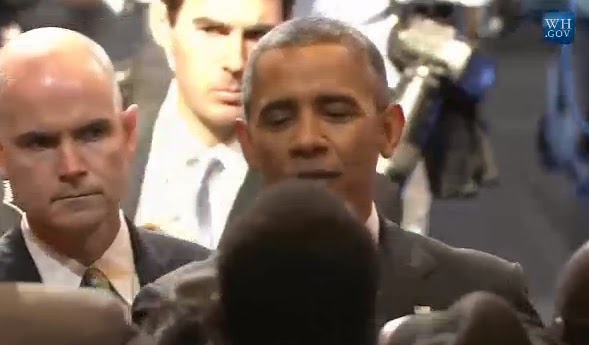
The Young African Leaders Initiative 2014 - #YALI2014 kicked off this week in Washington DC. Speaking at a meeting with 500 of the first class of YALI fellows, President Obama said that it will be renamed the Mandela Washington Fellowship (& doubled to have 1,000 fellows by 2016) and that four regional leadership centers would set up in Africa.

The regional leadership centers will be established in Senegal, Ghana, South Africa and Kenya and will offer courses on leadership, support for entrepreneurs through mentoring and access to capital and a networking forum. 

The Center in Kenya will have a robust training curriculum with direction from a partnership that brings together Deloitte’s global management and strategy skills, the established curriculum and capacity of Kenyatta University, the public administration training of the Kenya School of Government, and Africa Nazarene University’s youth engagement and outreach.

USAID is investing $38 million in the new YALI centers with support from the MasterCard Foundation ($10 million), Microsoft ($12.5 million), Intel ($5million) and Dow Chemical ($4 million). Others are McKinsey, IBM, General Electric, Procter​&​​G​amble and the Mara Foundation. (More at the YALI site). 

In a Q&A session, Obama also spoke about AGOA and the on-going  for renewal of the the trade partnership between the US & Africa; He said, they have learnt lessons from the previous phase of the partnership and will work to lower other export barriers (such as transport & trade finance), and, starting with Uganda, Kenya and Tanzania, take steps to see how AGOA can work with effective trading bloc for intra-Africa trade.
​​
The YALI Summit events will lead up to the the first US-Africa Leaders Summit, which, with over 50 presidents & prime ministers expected, is the largest gathering of African Leaders ever hosted by a US president.

Kenya's President Kenyatta is to participate in two events next week - a doing business in East Africa session and a presidential dinner, both organized by the Corporate Council on Africa (CCA) who have events for several other African leaders and nations like Ethiopia, South Africa, Ghana Liberia Congo  Mozambique and Tanzania among others.

Thursday, October 04, 2012

Possible Economic Bubble In Ethiopia?

-->
A guest post by @Kahenya

Ethiopia has a very positive economic outlook and yes, it has a lot of development going on, but is this sustainable, now that the linchpin (Meles Zenawi) is gone? The one thing that is universal about the entire continent is that the poverty line seems to grow every year, sometimes it shrinks, but only for a moment. The cliché remains, that the rich are getting richer and the poor are getting poorer and there is no true middle class -  and if there is, its only based on people who don't want to imagine that they are less than middle class.

Africa is the kingdom of billion {insert any local currency here} projects. Ethiopia also finds itself in the same quagmire, except for one thing. They are actually making it work for their benefit. In Ethiopia, construction and infrastructure development are at an all time high. It was necessary for this to happen until Meles Zenawi and his beloved Ethiopian People's Revolutionary Democratic Front (EPRDF) went their separate ways, much to the disadvantage of EPRDF. Zenawi's rule transited between dictatorship and benevolence and it was working for him and Ethiopia. Love him or hate him, from being out in the rebel trenches to donning a suit, Meles was every bit a tactical genius. He grew Ethiopia from a war torn country to one of Africa's fastest growing economies. Only Meles could conjure up infinite possibilities. - sometimes by sheer cunning and sometimes by sheer fear.

Hotel cautions on using skype
EPRDF needed Meles to live long enough to get to his end game which would have allowed EPRDF to focus on less ambitious but more people driven development. That did not happen. With him gone, and an open democracy in the horizon (since every linchpin's death or retirement is followed by internal crisis and eventual dissolution, with less political tolerance by the citizens), with a lot of projects still incomplete, and with Ethiopia still facing many financial challenges, the positive economic outlook has quickly shifted from “going to happen” to “may happen”.

EPRDF has moved from the strong offensive, to a sullen offensive-defensive. Push-Pull. Addis, like Luanda, Angola, defies Economic Science. If you buy a vehicle in Ethiopia, when you sell it, even years later, the value generally appreciates. Rents and property rates are astronomically high, coming close to rivaling Luanda – a huge developmental Achilles heel.

Lunch at the  Sheraton in Addis
The key driver of such high rates is the presence of Diplomats and NGOs who have an unending well of money – and this is where the very living ghost of Isaias Afewerki (President of neighbouring Eritrea) comes to haunt Ethiopia. Eritrea, despite being poor, is not dependent on Foreign Aid or NGOs. They have that to pride. For Eritrea, there are no illusions. Poor is poor so the only way is to go upwards - on their own. Ethiopia lacks that. Instead, they have to endure a very faint cushion, one that is rarely successful except in dire times. Unless Ethiopia starts equal distribution of development in the small business sector and begins to really crack the whip on poverty alleviation and shakes off its dependency on NGOs, EPRDF could find itself in a lot of trouble - just like the ANC is, despite them trying to conjure all sorts of ghosts, from Jacob Zuma's incarnation of Umshini Wami to the very living ghost of Nelson Mandela. Nonetheless, Ethiopia's economy is about to get a very shocking reality check.

Thursday, September 02, 2010

Rockefeller helps Farmers cope with Climate Change

The Rockefeller Foundation involvement in Africa goes as far back as 1914 and one of their goals is to strengthen food security in sub-Saharan Africa.

Climate change is affecting food security and the current floods in Pakistan attest and African farmers are seeing wild swings in weather, coping with higher temperatures, less dependable rainfall, and experiencing longer droughts. In Kenya, the Rockefeller Foundation estimates that maize production could decline by 30% in the next 20 years.

Africa countries need to recognize their vulnerability to climate change as ½ billion people depend on agriculture for their livelihoods, yet some governments are instead selling off buying tracts of productive land to other countries who are themselves investing to enhance their own food security through geographic diversification

The Foundation has thus made agricultural investments improve their productivity of farmers by reducing the risks they face through key innovations including

- Developing new affordable insurance products for small farmers & pastoralists that are indexed to weather; this encourages farmers to increase land & agricultural investment with the knowledge that they may be compensated if weather conditions adverse affect their harvest

pastoralists & their cattle camp in Nairobi's kileleshwa suburb during 2009 drought

- Funded the World Food Program to develop a software platform to predict most destructive elements; Known as RiskView, it can be customized or every district in every country in Africa and allows governments and aid agencies to when and where a drought will occur.
- Funded Kencall to implement a national helpline for farmers, staffed by a team of experts to answer farmer question on climate change, seeds, fertilizer, agro-dealer location etc – this will help overcome a challenge many famers don’t try new techniques or seeds because they don’t have enough information to take a risk. The information collected will become a research resource even outside Kenya.
- Partnered with Kenya-based Alliance for Green Revolution in Africa (AGRA), in a $50 million loan program through Equity Bank’s ‘kilimo biashara’ program in which the Foundation undertook some risk guarantee enabling the Bank lend to small farmers at below market risks who take up other products like fertilizer weather insurance, and use the help line.

read more

Wednesday, July 28, 2010

From Huawei to Makmende

Last Tuesday was a roundabout day that began with the Equity Bank half year results announcement at and ended with Safaricom launch of a U8220 Android phone made by Huawei.

In between I shook hands with James Mwangi, Churchill dodged my paparazzi snap attempt, a friend of mine missed out on a free giveaway of the Huawei phone, and I missed out on buying some shares in Equity Bank as my stockbroker (temporarily) misplaced my funds.

At the Huawei launch, I had interesting chats with one pal on Kenol and another who found out an interesting tale about mobile spectrums – basically Kenyans should ignore mobile phone company promises and forget about 4G as its’ reserved for the Kenya military until further notice.

Huawei and Safaricom were jointly launching an android phone to the Kenyan market and since the Safaricom COO was late in traffic as per his boss, Michael Joseph the CEO stepped up and launched the phone on his behalf. The CEO seemed underwhelmed by the occasion, maybe because his retirement was about to be officially announced or maybe because it was because the Smartphone being unveiled would cost about Kshs 30,000 and was nowhere near the $100 (~Kshs 8,000) price for a smart phone which he has commented as being a key target for future data growth.

This ambivalence perhaps cascaded down because when Safaricom ran adverts for the new phone in the next day's paper , they were advertising a VF845 costing Kshs 16,500 ($206) and not the U8220, which had just been launched. The 'correct' ad for the U8220 then ran the following day pricing the phone at 27,200 (~$340)

Two days later, Bank of Africa formally opened their Ngong Road branch at Bishop Magua Center. This is their second branch opening this month after Nakuru and they have set out to go after the not for profit customers. They have launched a Goodwill Current Account with goodies for NGO's including waiver of monthly ledger fees, cheque book costs, (Kshs) withdrawal/deposits, internal transfers, incoming wires, banker’s cheques, interim statements and a minimum operating balance.

And finally on Friday, in the same building, the iHUb hosted a launch by Kuweni Serious (Get Serious) of a of a series of clips aimed at getting young Kenyans to participate in the constitutional referendum and in public life and starred Makmende.
Here’s one clip

Thursday, November 27, 2008

Unga AGM 2008

The company which was founded in December 1908 by Lord Delamere to mill his wheat harvest, is now a century old. It is celebrating its fourth straight years of profits on the back of improved sales Kshs. 9.5 billion (~$125 million) and profits of Kshs. 564 million (~$7.5 million). The Chairman commented on the improvement from the time a few years back when they used to record losses and had their financial accounts qualified by the auditors.

slow registration

Excerpts: missed a few minutes of the meeting as the registration was really slow - just two ladies, with no computer. They had to write every shareholder name down, and have them sign, but without verification of their legitimacy

Bonus: The company offering a (1) bonus share for each five (5) held to reward shareholders since the board had opted not to pay a cash dividend this year.

Company structure: The Seaboard Corporation is a management company and shareholder that contributed to the turnaround. However their presence is a sore point with some shareholders unhappy that while they have no divined, Seaboard gets paid a minimum of Kshs. 12 million a year that will escalate as the company gets more profitable. Their agreement has also been extended by the directors for another five years and there was also a question on the loans owed to the company that could be called in at any time - an unlikely scenario according to the board
- Shareholders also asked on the relationship between Nampak (a partner company) and Bulpack which was a joint venture between Nampak and Unga to make bags. The dividend paid that appears in the accounts was paid to Unga from Bulpak, and not by Unga.

(No) Dividend: Though this was the fourth year of profits, the board said it still needed to retain cash for plant & machinery replacement and to also strengthen the balance sheet.

No Maize in Kenya: Later the Unga MD Nicholas Hutchinson gave a talk on the current maize shortage and stated that the company (Unga) had ran out of maize (corn) stock floor eight days ago. He said there is not enough maize in the country, and the late decision by the Government to import maize, means it will trickle to the markets slowly – by mid December. The Cabinet may release more to millers, but the Government also wants to build up grain reserves and assist displaced people (flood, post-election violence victims)

The maize harvest this year was bad - Unga is offering Kshs. 2,500 per and 2,250 in Nairobi and Eldoret respectively but are still not able to get enough maize so they are operating about 35 – 40% which may show in the coming results

For consumers faced with a high retail price (just under Kshs. 100 for a 2kg pack, it’s a good time for farmers, but bad for consumers (dangerous?) - as prices may not drop significantly even after the supply. He said that the Government will be importing maize to Nairobi at Kshs. 2,500 if no duty is paid and that it must speculative ventures – which has affected supply of maize. Also, next year's maize harvest could be just as bad.

Receivables: are much higher than the year before. Management responded that its from their increased business. They had in fact reduced the number of customers i.e. 55 key wholesalers that they deal (down from 140) with and gave them incentives to pay cash or open bank guarantees.

Outlook: - Asked about market share, management said it was growing. They focus on urban markets and supermarkets, and don't emphasize rural sales as entrepreneurs can flour mill and sell it cheaper than Unga branded products.
- Other subsidiaries: are performing well like the Uganda one and animal feed division - Unga had anticipated a maize shortage so had started to substitute maize with wheat in their animal feed. Wheat subsidiary is good though the current good prices may fall next year

Shareholder gift

Goodies: Each shareholder present got a voucher for a bale of baking flour. Which retails at about Kshs. 1,500 ($20)

Tuesday, October 09, 2007

Rant: Change the Channel

Next Friday, we are having a talk on AIDS – again! This may be the third this year, as there’s one every quarter. That’s because the company has committed (and arranged) for employees to receive these talks and the Ministry of Health can afford to send people out to give such talks. Or there’s a there’s a huge donor funding for HIV programs that the government has ample capacity to spend

I am not diminishing the impact, significance, or message about HIV but what about malaria? I’m sure it causes more deaths than HIV. It’s not just expectant or new mother who need lessons in malaria. What about cancer - ok its breast cancer awareness month? Cholesterol, high blood pressure & hypertension, pneumonia, and other diseases that also wipe out thousands of young people? Cirrhosis and the dangers of drunk driving! Any why it always about VCT’s not full medical checks – for cancer, high blood pressure etc? The kind of stuff people use Capital FM and other radio stations to promote new hospitals & equipment.

This rant should be directed at the personnel manager, but he’ll only come up with programs that fund themselves so we’ll continue to hear about HIV since that is FREE and funded.

I’d like to have more workplace talks that address overall health problems, beyond HIV, or assuming we are all healthy how about some internal uplifment though a fulfilling enlightening talk on money? - advice on investments, real estate, small business, opportunities, and entrepreneurship.

Isn’t there government funding or a donor package for that? Or is that left to AID workers in rural areas only?

Friday, June 08, 2007

Saudi Ok, Africa Not

After listening to a week of stories on aid, development, and entrepreneurship, we emerged from Ted Global in Arusha to find one of the proponents of a new vision for development in Africa - outgoing British prime minister Tony Blair endorsing shady dealings that involve Saudi Arabia in the name of strategic relationships

The implications of this are that (accoring to the US & UK governments) is that corruption/economic transgressions in Saudi Arabia are ok, but not in Zimbabwe or (former aid darling) Uganda. But the effects of these are that no British high commissioner can come preach good good governance to Kenya, or any other African country.

Africans are not all corrupt, not are we without faults, but so are British and American and their agents. In the words of George Ayittey we will find African solutions to African problems and be wary of cheerleaders on governance.

Tuesday, October 03, 2006

KCB treading

KCB has lowered borrowing rates for a variety of retail loans by up to 5% and the move is already having a knockdown effect with customers, at other bank, asking for their loans rates to also be lowered likewise.

But for KCB, their intention is probably to accelerate their lending which has remained flat this year. From January to June 2006 their loan book is up less than 1%, compared to peers Barclays and Standard Charted whose loan books have increased by 7% and Equity Bank whose loan book increased 46% in the half year.

Card ping
CFC card account holders can receives SMS each time their MasterCard’s are used/charged.

School Finance Loans
(From Africa Intelligence )
The International Finance Corporation (IFC) will provide financing for private school institutions in Kenya, towards purchase of educational materials, and other capital expenditures under a formula which it inaugurated in Ghana last year.

On the flip side Bretton Woods Project offers six reasons why the World Bank (and IFC) should not finance educational projects

Friday, February 03, 2006

February 3


Jobs

Oriental commercial bank: (formerly Delphis)
- Branch managers
- Head of finance
- Head of internal audit
- Head of technical services
- Head of treasury, foreign exchange, and international banking
- Deputy general manager
Apply through the executive selection division of HLB Zainash Consulting at consult@ashvir.com by February 7

K-Rep Bank
- bank clerks
- business development officers

KADET: The Kenya agency for development of enterprises & technology (KADET) a world vision international subsidiary
- Audit assistant
- Accounts assistant
Apply to kadetrecruit@wvi.org by February 8

UNDP/GOK: public sector reform/development secretariat
- Program coordinator: transformational leadership ethics and values
- Technical coordinator: information and communications
- Program officer: transformational leadership ethics and values
Apply though inmail.kenya@undp.org by February 6

Caritas
- Finance & Administration officer at Caritas, a Roman Catholic aid agency, who will be based in Nairobi, with frequent travel to Sudan and Somaliland. Apply through jobs@caritas-switzerland.org by 12 February

Millennium Villages Project MVP of the World Agroforestry Centre (ICRAF) - based in Kisumu
- Project Manager
- Operations Manager
- Agricultural Coordinator
- Health Coordinator
- Infrastructure Coordinator
- Community Development Coordinator
- Enterprise Coordinator
Apply via icrafhru@cgiar.org by 15 February.

HLSP
HLSP is an international organisation working to improve world health with opportunities in Nairobi
- Business Manager
- Project Officer

Symphony a leading regional IT company
- channel manager
- sales executive
- products & procurement manager
- admin assistant
- senior accountant
- accounts assistant
- system engineer
apply though hrd@symphony.co.ke by 10 February.

Bank News

- IFC will set up a regional credit reference bureau in Nairobi to serve Kenya Uganda Tanzania Rwanda and Burundi.
- CFC will launch a credit card this year.
- Consolidated Bank has added on ATM’s (Kenswitch networked) in Isiolo, Nyeri and Maua.

Corporate News

Half-year corporate results as at December 31

Mumias Sugar: Six-month revenue increased from 6.39 to 6.92 billion shillings despite selling 5% sell sugar and generating 50% less cash. After tax-profit rose from 567m to 774m and the company will pay an interim dividend of .75 per share (last year was .6) to shareholders on March 27

East African Portland: Turnover at the cement company increased from 2.59m to 3.11 billion shillings and after tax profit increased from 252m to 594m shillings. The company will pay an interim divided of 1.3sh per share on March 31. The company’s performance was assisted by the strong shilling versus the Yen in which the bank is servicing a huge loan.

Unga: Turnover was flat - 3.79 billion shillings ( 3.74b in 04) and after tax profit is still low, but increased from 34 to 73 million in the half year.

Sports
Saturday 04 February
3:30 PM AFCON:: QF 3: Nigeria vs Tunisia
4:15 PM 6 Nations:: Ireland vs Italy
5:30 PM Everton vs Man City & SS6 Birmingham vs Arsenal
6:30 PM 6 Nations:: England vs Wales
7:30 PM AFCON:: QF 4: Cameroon vs Ivory Coast
8:00 PM Man Utd vs Fulham
8:15 PM Indoor GP: Stuttgart, Germany
10:15 PM Real Madrid vs Espanol

Sunday 05 February
4:00 PM Tottenham vs Charlton
5:45 PM 6 Nations:: Scotland vs France
6:30 PM Chelsea vs Liverpool

Monday 06 February
2:00 AM ESPN Superbowl XL: Seattle Seahawks vs. Pittsburgh Steelers
7:15 AM Pakistan vs India 1st ODI

Tuesday, May 10, 2005

IFC (World Bank) Aid to Kenyan Banks

Barclays to fund SME’s
Th International Finance Corporations (IFC) will provide a loan Barclays Kenya of up to $20 million (Kshs 1.6 billion), the proceeds from the Loan will be used primarily to fund medium sized corporates which are in need of US$-denominated funding, and will free up the Bank's local currency resources for on-lending to smaller corporates.

I&M Bank to fund trade finance
IFC will provide a loan to Investments and Mortgages Bank (I&M Bank) of up to $5 million to support the bank's growing SME client base and export-oriented segment in Kenya. IFC will also consider providing I&M with equity of up to $2 million (Kshs.160 million) to shore up the bank's core capital.

Barclays to fund solar energy projects
Barclays Bank of Kenya plans to offer loans to Savings and Credit Cooperatives (SACCOs), which are members of Kenya Union of Savings and Credit Co-operatives (KUSCCO). SACCOs provide financial services to a large section of the adult population in Kenya, and make loans to individuals who do not save with or borrow from mainstream banking institutions. SACCOs receiving loans under this project will provide "solar loans" to their members to purchase solar home systems to be installed by Solagen Ltd. and other leading Kenyan PV technical service providers. The total amount is estimated at $4,6 million (Kshs 368 million) and will be sourced from the IFC.

Friday, March 11, 2005

Friday, February 04, 2005

Business Briefs

Bank profits lower in 2004
Banks have started to report their 2004 results: At First American Bank (owned by Sameer investments), despite a sizeable drop in net interest income, managed to increase its pre-tax profit by 43% - from 150 million to 214 million (a 43% increase), thanks to increased other income (commission and fees). This will be the situation at most bank as the low interest rates forced them to seek non-traditional income streams in 2004.

KPA crisis
Staff are on a go slow to protest the treatment of their (suspended/not-suspended but barred from the premises) MD, Mr Brown Ondengo, as well as non-payment of a promised bonus.

Mukhisa vs. Bretton Woods
At the Davos World Economic Forum, Minister Mukhisa Kituyi has urged the World Bank & IMF to stay away from global trade negotiations, and leave them to the World Trade Organization (Standard Feb 4)

Nairobi-Miami Flights on Hold
Titus Naikuni, the Kenya Airways MD now says that Kenya Airways will not be flying to Miami, saying “he does not see a commercial justification for it at this point in time” (Standard Feb 4)

A380 Welcome in Nairobi
Meanwhile the Managing Director of the Kenya Airports Authority, Mr. George Muhoho, said that Jomo Kenyatta Airport would be able to receive the new Airbus A380 giant double-decker aircraft in Nairobi when it begins operations, he said, “a suitable passenger bridge has been identified, and lounges will be redesigned to accommodate departing passenger. Also the runway and taxiways will be strengthened and widened.” (Nation Feb 3)

Friday, January 21, 2005

Housing plan in jeorpady

The government’s plan to create low cost housing was put in jeopardy earlier this month after the NHC bond flopped. In a complex web of debt management, the World Bank prevented the government from guaranteeing the bond - as the Bretton Woods Institutions don’t want the Kenya to inject money into troubled state enterprises. NHC’s 150,000 housing units were to be constructed in all the key urban centres in Kenya.

However, going by recent history, houses built by parastatal for the poor usually end up being too costly with only the upper middle class or rich able to afford them. Among the prospective financiers that had expressed interest in the deal include International Finance Corporation (IFC) and the French Development Agency (AFD).

Tuesday, January 18, 2005

Enough blame to go around

Today the Government, which has recently been accused of not doing enough to eradicate poverty, joins the UNDP to launch the National Plan to achieve the millennium development goals.

The World Bank says that the government does not have the capacity or coordination to achieve these goals, nor does not have the political will to privatise parastatalas and undertake civil service reform, and the Kenyan economy remains vulnerable to external events that may undermine these goals.

The United Nations blames the IMF and the World Bank, saying that the Bretton Woods institutions actually undermine the UN’s millennium development gaols efforts by failing to budget for them in their aid packages.

And local investors say that the only way the government will get development funds for these projects is by enacting a new constitution which will bring about public sector reforms. The investors support the running of ministries by professionals, not politicians.

Tuesday, December 14, 2004

Kenya gets its 44th Bank

While donors feel that there are too many banks in this country, Equity is going to take a crack at the big four Banks that dominate the Kenyan banking scene.

Backed by 5 billion in assets and the muscle of IFC, Equity has already applied to the CMA to be listed on the Nairobi Stock Exchange, which should happen by mid 2005.

LinkWithin

Related Posts with Thumbnails