a review of the book without having read the book. Note that I generally don’t like read reviews’. If I want to watch a movie or read a new fiction book, I won’t read any reviews of it till after I watch it; this is because reviews tend to contain too many spoilers and plot giveaways.
During the May Day holiday weekend, I finally finished reading It’s Our Turn to Eat – the bootleg version, one which the author warned was not the real copy. It’s a fairly comprehensive e-mail; I’d wager its close enough to the real thing that and that over 90% of the blog readers here have read the PDF (real or faux) - and please don’t ask me for a copy.
The introduction of the book to Kenya, a biography of former anti-corruption Tsar John Githongo (written by Michela Wrong), had three background factors
- John Githongo is a powerful, polarizing person in Kenya; a patriot & champion to some, a traitor & coward to others. While his accounts of events related to Anglo Leasing has been published in his parliamentary reports; not much has been written about Githongo the person this is his story
- While the Government of Kenya never commented or banned, the book, several Nairobi bookshops shied away from displaying or advertising the book. This was because of previous libel awards that bookshops who were near easy targets got fined for carrying books that powerful leaders (Nicholas Biwott) felt besmirched them
- Also at the same time, a PDF version of the book also circulating and was forwarded and downloaded widely The author Michela Wrong and her publishing house realized that there was a leaked version circulating and:
(i) Alerted her friends and the net community that a faux/earlier/incomplete version was being circulated
(ii) Released a low cost e-book to counter the faux copy.
Having only read the faux copy, I can only comment on what’s in it. I have no doubt it comes close to the real thing. I still intend to get a copy of the real book – either buying one from a friend, or having one delivered from abroad - good enough that I want to read the read the book - and not the E-Copy but the actual book; having a book still convey paper books have functionality, and durability that e-books don’t – I can read the book anywhere (matatu, bank queue, at lunch). Demand for the book is make me want to break a vow and obtain a credit card perhaps to buy it from Amazon (UK) or the publisher.
Michael Wrong’s last book I read was In the Footstep of Mr. Kurtz, about Mobutu Sese Seko and his years as President of Zaire (a.k.a the Democratic Republic of Congo.) It’s the definitive book for anyone new to the Congo or wishing to understand the Congo's post-independence history, economy, diversity, people, problems etc. Likewise the Githongo book - focused on high-level government corruption, raw tribal political leadership, ease of corruption, political interference/weakness of judiciary - will be the definitive book of the Kibaki era (Kenya 2002 to the present) and until other government personalities commission their own biographies, this will be the way that the recent political history of Kenya will be understood. It would be nice to read about Michael Waweru on tax collection strategies, Peter Kenneth and the use of Constituency Development Funds, Esther Koimett at the Privatization process, and Kilemi Mwiria on free primary education etc.
Other local reviews of the book.
Showing posts with label John Githongo. Show all posts
Showing posts with label John Githongo. Show all posts
Tuesday, May 12, 2009


Thursday, April 09, 2009
Mostly Equity – Suspensions & Housing Evictions

Equity suspended: Equity Bank was briefly suspended as a Central Depository Agent by the Central Depository & Settlement Corporation (CDSC). They have smartly escaped unscathed without answering any charges owing to:
- Playing one regulator against another the. The Capital Markets Authority (CMA) immediately reversed the ban, and reinstated Equity while terming the CDSC action as being against procedure
- By invoking the ‘small investor’ Equity said that they were in trouble because they had reached out to the small investor, lending them funds to buy Safaricom shares without collateral, and some people did not like that
Lost in the story is
- Equity split shares were supposed to start trading on April 14, but have been trading as split prices and have appreciated about 40% since the announcement
- The spat makes the CMA and CDSC look bad; by having a turf war (PDF) and fighting in public both claiming to fight for the integrity or interest of investors
- Why won’t Equity pay the minuscule amount or respond to the regulator (CDSC)?
- Comments made by the CEO at the bank AGM, bragging having the most investor accounts in the country coming back to haunt at a time when brokers are (i) broke (ii) resentful/envious
- More tales at the stockskenya forum
Equity moves in at Housing Finance: At Housing Finance, Equity is asserting its authority at the bank and Equity directors will now form 1/3 of the Housing Board of Directors, with Peter Munga (Equity chairman) Benson Wairegi (Equity vice chairman) and Babatunde Soyoye (Helios) all appointed in 2008 and who will all be ratified by Housing Finance shareholders this month.
During the 2008 rights issue at Housing Finance, Equity also increased their ownership stake from 20% to 24.9% while sister institution British American Investments (Britak) also increased from 4.9% to 7.5%. The rights issue also saw the National Social Security Fund reduce stake from 7.8% to 6.8% as the Government of Kenya which did not take up any new shares saw its stake reduce from 7.3% to 3.6%
Opportunities
- Invest in a Government of Kenya Bond to raise 10, billion shillings ($125 million), and earn a potential 10% bond return (PDF); minimum application amount is 50,000 ($625), and the offer closes 22 April. (better than Madoff?)
- Maker Faire Africa (MFA), a celebration of African ingenuity, innovation and invention, will take place August 13-15 at the Ghana-India Kofi Annan Centre of Excellence in ICT in Ghana's capital, Accra there are opportunities to sponsor the summit
- Jitihada is the Kenya National Business Plan Competition – (details) (PDF) that will be launched in mid-April.
Create a Logo for an international mobile banking conference and win $200. Details here, found at @whiteafrican
Jobs
- Old mutual: Broker distribution manager, Mass market manager. Apply to recruitment@oldmutualkenya.com by 17/4
- National social security fund managing trustee. apply through manpower associates by 26/4
- Capital Markets Authority: Assistant Manager (Legal Framework), Accountant, Assistant Manager (Investigations), Manager (ICT). D/L is 15 April
Saturday, January 27, 2007
Recovery Week
Out of hospital and recovering this week and trying to catch up after two weeks away from a computer. Missed so much, mailboxes are full, have to send proper replies, and most of the news links are now out-dated and need to be refreshed.
It was a pleasant week, whose main difficulty was the passage to time. I read many books and consulted Dr. Hannibal Lecter who had spent 8 years in one room.
Describe a share investor
The Economist published a series on executive compensation and ran a quote from 17 years ago that can be used to accurately describe (we) investors who speculate on shares;
To a shareholder in a typical company, a share is little more than a betting slip. It is bought at what a shareholder thinks are good odds to provide winnings he hopes will be large.
The notion that he owns part of a company makes as much sense to him as it would for the average gambler to imagine he owns part of a horse running in a 2:30 race.
A title deed to a house tells someone what he knows instinctively - that he owns the place and must care for it. A share certificate tells him nothing more than that he has the right to a dividend and the chance to make some cash.
Tiomin sells out
Tiomin will sell ATW Venture Corp. a 50% interest in the Kenyan mineral sands for US$35 million to raise funds owing to cost escalations.
Githongo blog
He must be wondering what he has to do to get his point, but after putting up a blog he should be very careful
Stanbic Results
With over 1 billion shares on offer and despite the over-subscription, there’s won’t be too many complaints about allocation;
- Uganda nationals get full allocation up to 2.15 million shares
- Others (including Kenyans) get full allocation up to 109,500 shares (about 312,000 shillings)[But the stock exchange there trades for (I think) 3 days a week]
Sky please
After years of getting (and under appreciating) SKY news of Britain, the local STV channel has taken it down and replaced it with VOA TV. There’s no apparent reason why VOA should be broadcasting as there’s nothing I’ve seen that is newsworthy or worth tuning in for.
Opportunities
Jobs
International director of fund raising at AMREF. Details here and apply through olga@crsearchandselection.com by 9/2
Financial controller at Children’s International. Apply through KPMG at esd@kpmg.co.ke by 2/2
Senior project officers (2) at EADB Nairobi. Apply to the Kenya country manager at box 47685 by 16/2
Housing Finance: Manager [HR], assistant manager[legal], officer [insurance]. Apply to human.resources@housing.co.ke by 3/2
I&M Bank: Details here for Cashiers [Tellers], Liability Manager, Trade Finance Officer, and Relationship Manager [Assets].
Marshalls: General Manager (Tata), General Manager (KIA/Honda), Marketing Manager. Apply through Dagger Consultants at gd@africaonline.co.ke by 9/2
National Oil Corporation: Various jobs including customer service assistant, ICT manager and internal audit assistant. Apply to hr@nockenya.co.ke by 13/2
NIC Bank: Nakuru [business development manager, sales executives (2), branch advances officer, branch customer service officer], Mombasa [service delivery manager], Nairobi [Corporate relationship manager]. Apply to the Head of HR 44599-00100 Nairobi by 7/2
Finance manager at Sense International - Nairobi. Apply to info@senseint-ea.org by 2/2
Finance manager at Tearfund - Nairobi. Apply to internationaljob@tearfund.org by 31/1
Other
KCB is seeking new ATM machines to expand its network into the hundreds.
The Nairobi Stock Exchange will conduct a Market Index Review via a consultancy.
Associate consultants at the influential Steadman Group. Apply to md@steadman-group.com
It was a pleasant week, whose main difficulty was the passage to time. I read many books and consulted Dr. Hannibal Lecter who had spent 8 years in one room.
Describe a share investor
The Economist published a series on executive compensation and ran a quote from 17 years ago that can be used to accurately describe (we) investors who speculate on shares;
To a shareholder in a typical company, a share is little more than a betting slip. It is bought at what a shareholder thinks are good odds to provide winnings he hopes will be large.
The notion that he owns part of a company makes as much sense to him as it would for the average gambler to imagine he owns part of a horse running in a 2:30 race.
A title deed to a house tells someone what he knows instinctively - that he owns the place and must care for it. A share certificate tells him nothing more than that he has the right to a dividend and the chance to make some cash.
Tiomin sells out
Tiomin will sell ATW Venture Corp. a 50% interest in the Kenyan mineral sands for US$35 million to raise funds owing to cost escalations.
Githongo blog
He must be wondering what he has to do to get his point, but after putting up a blog he should be very careful
Stanbic Results
With over 1 billion shares on offer and despite the over-subscription, there’s won’t be too many complaints about allocation;
- Uganda nationals get full allocation up to 2.15 million shares
- Others (including Kenyans) get full allocation up to 109,500 shares (about 312,000 shillings)[But the stock exchange there trades for (I think) 3 days a week]
Sky please
After years of getting (and under appreciating) SKY news of Britain, the local STV channel has taken it down and replaced it with VOA TV. There’s no apparent reason why VOA should be broadcasting as there’s nothing I’ve seen that is newsworthy or worth tuning in for.
Opportunities
Jobs
International director of fund raising at AMREF. Details here and apply through olga@crsearchandselection.com by 9/2
Financial controller at Children’s International. Apply through KPMG at esd@kpmg.co.ke by 2/2
Senior project officers (2) at EADB Nairobi. Apply to the Kenya country manager at box 47685 by 16/2
Housing Finance: Manager [HR], assistant manager[legal], officer [insurance]. Apply to human.resources@housing.co.ke by 3/2
I&M Bank: Details here for Cashiers [Tellers], Liability Manager, Trade Finance Officer, and Relationship Manager [Assets].
Marshalls: General Manager (Tata), General Manager (KIA/Honda), Marketing Manager. Apply through Dagger Consultants at gd@africaonline.co.ke by 9/2
National Oil Corporation: Various jobs including customer service assistant, ICT manager and internal audit assistant. Apply to hr@nockenya.co.ke by 13/2
NIC Bank: Nakuru [business development manager, sales executives (2), branch advances officer, branch customer service officer], Mombasa [service delivery manager], Nairobi [Corporate relationship manager]. Apply to the Head of HR 44599-00100 Nairobi by 7/2
Finance manager at Sense International - Nairobi. Apply to info@senseint-ea.org by 2/2
Finance manager at Tearfund - Nairobi. Apply to internationaljob@tearfund.org by 31/1
Other
KCB is seeking new ATM machines to expand its network into the hundreds.
The Nairobi Stock Exchange will conduct a Market Index Review via a consultancy.
Associate consultants at the influential Steadman Group. Apply to md@steadman-group.com
Tuesday, April 18, 2006
Awaiting KQ

Kenya Airways financial year ended on March 31 and their final results for the year should be released within a few weeks. Going by their half year results the airline's revenue is likely to be above 50 billion shillings and pre tax profit may pass 7 billion. The airline is likely to follow the trend of several companies and double it’s dividend payment to shareholders to 2.50 shillings for the year.
Other Corporations
Jubilee Insurance pre tax profit was up from 359m to 471m and the company will pay a dividend of 4 shillings per share, up from 2.5 the year before.
Standard newspapers group published their half-year results showing turnover increased from 961m to 1,098m and pre-tax profit increased from 45m to 92m. Not this time, but the company hopes to resume paying dividends once its balance sheet restructuring is completed.
Other Business
Pre-shipment scandal: According to Africa Confidential, there was a 'deliberate and concerted effort' to award a US$10-million pre-shipment inspection contract in September 2005 to Switzerland's Société Générale de Surveillance and Britain's Intertek International.
Little help in corruption war: Also from Africa Confidential, there's diminishing Western support for the war on corruption in that US-based risk consultants Kroll Associates decided on April 3 to shut down their Africa practice because the company judged "Africa to be just too risky." The Kenya Government had, through John Githongo, previously hired Kroll to find billions of looted shillings stashed in foreign accounts.
Wednesday, April 05, 2006
Lunch with R & G
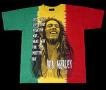

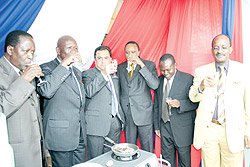
Yesterday I attended a corporate function (center picture) in Karen. I arrived late, and just as the vice president’s motorcade was leaving. After watching bodyguards jump into moving cars, Raila Odinga pulled Uhuru Kenyatta aside for a brief chat. They talked alone for a few minutes before Uhuru’s Mercedes pull up and he also left (did not know that the leader of official position uses a GK car) . Raila also entered an SUV and drove off, waving to the small crowd though his open window.
Later we walked to the Horseman restaurant for lunch to end the event we were surprised to find that all the politicians had also come for the lunch as well, and we seated at a corner table. As I sat there, I thought about the last time I had been this close to, and can claim to have had a lunch with, Raila.
It was in December 2004, also in Karen, the day Raila’s daughter Rosemary, got married in a huge wedding for the ages. It was huge with pomp, bling, money spent well – expensive but tastefully, and was attended by President Kibaki, former president Moi and thousands of others.
That day, I was very surprised to see John Githongo for the first (and only time) time in my life, as he walked in with President Kibaki’s entourage of the day.
Reading the Githongo diaries, we know now that it was a momentous day for Githongo as he had just before wedding, given the president another explosive briefing on the still underground Anglo Leasing scandal. And just over a month later, he was gone, resigned and in exile from the Kenya government.
And there they were that day celebrating with Raila the man who sways & seduces people, politicians and voters - and who has been a critical ally turned lethal foe for both presidents Moi and Kibaki. Rails was also a man who Kibaki’s people had been uncomfortable with almost to the point of obsession. The Githongo diaries are peppered with utterances where Kiraitu Murungi and other officials told Githongo that Anglo leasing funds were to be used to fight Raila at Bomas, their fears Raila knew all about Anglo Leasing was, that they needed Anglo leasing funds to build up a war chest to strengthen the president and contain Raila.
Fast forward to yesterday, many months later, when I also attened aKwani poetry slam in the evening. IMHO, the best reading was given by one Muki Garang who gave some nice def poetry performances. He also wore a t-shirt with John Githongo’s portrait.
John Githongo, who is alive, has joined a select list of people immortalized by young revolutionaries - such as Che Guevara, Bob Marley, John Lennon, Malcolm X, Mahatma Gandhi, even 2Pac. Most of them died before their time, often at the hands of others. Yesterday was also the date when another icon, Martin Luther King was assassinated in 1968. He is not a t-shirt icon like the others, but he is recognized in a greater way with monuments, a holiday and is credited with the legacy of spearheading the drive to ending separation in America.
But sometimes when you reach a summit, the only place you can go is down - and the years have not being kind to some people e.g. Michael Jackson, Jesse Jackson and now Whitney Houston - who would all be called icons today if they had left the scene in the late 80's with their reputations intact. People would be talking about them in legendary status, wearing their t-shirts, and own tons of their memorabilia.
John Githongo deserves more than a t-shirt as recognition item - which is why he needs to keep evolving and adapting like Raila has done. Maybe Githongo should apply to become the next head of Transparency International in Germany or the USA or come back and be the next head of Kenya Anti-Corruption Commission. He has to keep plugging away, not just commenting.
Monday, February 20, 2006
February 21
Bank news
SMS Banking: Paramount Bank is the latest to introduce SMS Banking in conjunction with Safaricom. Each SMS received e.g. for mini-statements, withdrawal/deposit notifications, balance queries and Forex rates will result in a 10 shillings debit to an account. This compares with Co-op Bank which charges 15/= to 30/= for similar services via mobile phone.
Top dog: Citibank Kenya gets a new MD
Un-doing Githongo

The Kenya Pipeline Company has resumed construction of its headquarters in Embakasi which was stopped by then-PS John Githongo. A move to new building, once complete, should save the company about 50 million a year which it pays to the National Bank for renting one quarter of its headquarters in downtown Nairobi.
Other news
BAT: In 2005, British American tobacco turnover increased from 9.87b to 11.2 billion shillings and after tax profit increased from 1.21b to 1.38b. The company will pay a final dividend of 4.5 shillings after the AGM on 25 April to shareholders as at 20 March. Total dividend for the year will be 12.5 out of EPS of 13.82 shillings for the year. Like EABL and Safaricom who probably feel some guilt over their high annual profits, BAT reminded the public that they paid 5.3 billion shillings to the government through excise, VAT and income taxes last year.
Kengen has cancelled a controversial plan to reserve IPO shares in the company for a select group of investors.
The NSSF is still saddled with several prime plots a year after they first tried to sell them. These include a 4.7 acre parking lot between GPO & Grand Regency, .9 & 1.3 acre plots on State House, 2 acres opp. Fairview Hotel and 63 beach-front acres in Kikambala Mombasa, among others. They appear to have sold their 50 acres near Karen, 20 acres on Langata Road and 2.5 acres on Hospital Rd in Upper Hill.
Opportunities
Develop web sites for the Government of Kenya (tender 3/2005/06 ) including the official government web site and standard sites for each of the 33 government ministries. Apply to the Secretary to the Cabinet and Head of Public Service, P O Box 62345-00200 Nairobi by March 20. More info can be obtained from the ICT secretary at info@kenya.go.ke and the application process also includes a non-refundable fee of 10,000 shillings.
Import from Japan: The Government of Japan is funding an import substitution program to businessmen and companies through the Government of Kenya Monday. Apply by March 13 to crownagents@ke.crownagents.com.
Jobs
- AATF administration & finance manager at the Africa-agricultural technology foundation. Apply at aatf@aatf-africa.org by Feb 24
- Danida Kenya senior private sector development adviser. Apply here y Feb 23.
- IFC Expert consultants at the Africa business environment rapid response task force. Apply at ifc.org/careers by March 3.
Politics
Political Reform*1: Planning Permanent Secretary, Dr. Edward Sambili, has called for the Kenya Anti-Corruption Commission to probe allegations of misuse of constituency development funds (CDF).
Political Reform*2 From South Africa - Contained in the ANC’s election manifesto is a code of conduct for their municipal candidates that Kenyan MP’s should be asked to swear to include;
- I will fight against corruption in any guise or form.
- I will listen to the views of the community and hold a public meeting with all community members to report back on my work, at least four times a year.
- I will live in the community that has elected me.
SMS Banking: Paramount Bank is the latest to introduce SMS Banking in conjunction with Safaricom. Each SMS received e.g. for mini-statements, withdrawal/deposit notifications, balance queries and Forex rates will result in a 10 shillings debit to an account. This compares with Co-op Bank which charges 15/= to 30/= for similar services via mobile phone.
Top dog: Citibank Kenya gets a new MD
Un-doing Githongo

The Kenya Pipeline Company has resumed construction of its headquarters in Embakasi which was stopped by then-PS John Githongo. A move to new building, once complete, should save the company about 50 million a year which it pays to the National Bank for renting one quarter of its headquarters in downtown Nairobi.
Other news
BAT: In 2005, British American tobacco turnover increased from 9.87b to 11.2 billion shillings and after tax profit increased from 1.21b to 1.38b. The company will pay a final dividend of 4.5 shillings after the AGM on 25 April to shareholders as at 20 March. Total dividend for the year will be 12.5 out of EPS of 13.82 shillings for the year. Like EABL and Safaricom who probably feel some guilt over their high annual profits, BAT reminded the public that they paid 5.3 billion shillings to the government through excise, VAT and income taxes last year.
Kengen has cancelled a controversial plan to reserve IPO shares in the company for a select group of investors.
The NSSF is still saddled with several prime plots a year after they first tried to sell them. These include a 4.7 acre parking lot between GPO & Grand Regency, .9 & 1.3 acre plots on State House, 2 acres opp. Fairview Hotel and 63 beach-front acres in Kikambala Mombasa, among others. They appear to have sold their 50 acres near Karen, 20 acres on Langata Road and 2.5 acres on Hospital Rd in Upper Hill.
Opportunities
Develop web sites for the Government of Kenya (tender 3/2005/06 ) including the official government web site and standard sites for each of the 33 government ministries. Apply to the Secretary to the Cabinet and Head of Public Service, P O Box 62345-00200 Nairobi by March 20. More info can be obtained from the ICT secretary at info@kenya.go.ke and the application process also includes a non-refundable fee of 10,000 shillings.
Import from Japan: The Government of Japan is funding an import substitution program to businessmen and companies through the Government of Kenya Monday. Apply by March 13 to crownagents@ke.crownagents.com.
Jobs
- AATF administration & finance manager at the Africa-agricultural technology foundation. Apply at aatf@aatf-africa.org by Feb 24
- Danida Kenya senior private sector development adviser. Apply here y Feb 23.
- IFC Expert consultants at the Africa business environment rapid response task force. Apply at ifc.org/careers by March 3.
Politics
Political Reform*1: Planning Permanent Secretary, Dr. Edward Sambili, has called for the Kenya Anti-Corruption Commission to probe allegations of misuse of constituency development funds (CDF).
Political Reform*2 From South Africa - Contained in the ANC’s election manifesto is a code of conduct for their municipal candidates that Kenyan MP’s should be asked to swear to include;
- I will fight against corruption in any guise or form.
- I will listen to the views of the community and hold a public meeting with all community members to report back on my work, at least four times a year.
- I will live in the community that has elected me.
Friday, February 17, 2006
Spy vs Spy

Africa Confidential reports that both President Kibaki and National Intelligence chief Brigadier Wilson Boinet knew that Githongo was covertly recording conversations with senior officials in the government. And for his part Boinet was monitoring all of Githongo's external calls.
Saturday, February 19, 2005
Corruption Forum
Kenya Social Forum and Transparency International held a public debate on the War on Corruption on Feb 17th at Lillian Towers. Speakers included Gladwell Otieno, MP’s Omingo Magara & Billow Kerow, David Makali of the Standard and Patrick Kiage of the LSK.
MP Magara said
- Even though donors offered parliament free Internet connectivity, and computerization of all parliamentary processes, nothing has happened for four years.
- He has to use a cyber café in parliament.
- As a former tax collector, he’s now shocked now that he can see how taxpayers money is spent by the government.
- A bill he introduced to make the parliamentary process open to the public was defeated. He promised to submit to TI a list of all MP’s who voted down his motion.
MP Kerrow said
- Says parliament is hampered by what it can do
- Media reporting of parliament is poor; 5 hours of debate is reduced to 1 minute on the nightly news
- Government motions and bills take up 90% of parliamentary debate time
- Parliament must publicise all that it does
- Says he asked Mwiraria about two of the phantom payments (Universal Satspace: internet bandwidth & Silversonic: police vehicles) in July 2004 that Clay spoke about – the Minister was unable to explain what the payments were for, or why he had for two years paid for a bogus deal set up by KANU
- Claims that, just before he retired, Githongo had received the Kroll Report on assets abroad held by Kenyans, including ministers. He will push for the report to be tabled in parliament.
MP Magara said
- Even though donors offered parliament free Internet connectivity, and computerization of all parliamentary processes, nothing has happened for four years.
- He has to use a cyber café in parliament.
- As a former tax collector, he’s now shocked now that he can see how taxpayers money is spent by the government.
- A bill he introduced to make the parliamentary process open to the public was defeated. He promised to submit to TI a list of all MP’s who voted down his motion.
MP Kerrow said
- Says parliament is hampered by what it can do
- Media reporting of parliament is poor; 5 hours of debate is reduced to 1 minute on the nightly news
- Government motions and bills take up 90% of parliamentary debate time
- Parliament must publicise all that it does
- Says he asked Mwiraria about two of the phantom payments (Universal Satspace: internet bandwidth & Silversonic: police vehicles) in July 2004 that Clay spoke about – the Minister was unable to explain what the payments were for, or why he had for two years paid for a bogus deal set up by KANU
- Claims that, just before he retired, Githongo had received the Kroll Report on assets abroad held by Kenyans, including ministers. He will push for the report to be tabled in parliament.
Tuesday, February 15, 2005
Less Talk
There’s a backlash against colourful/media-friendly personalities right now: COTU Secretary General Francis Atwoli and NGO Council chairlady Orie-Rogo Manduli are both under-fire by members of their respective organizations – who believe that their motor mouths are damaging the credibility of the organizations they lead. John Githongo has become the Kenyan Dick Cheney – who now lives at an “undisclosed location,” while Ezekiel Mutua of the KUJ is under fire from all sides. Meanwhile it appears that the media has given Martha Karua blackout following her erratic behaviour when they show up, and Mutava Musyimi has gone underground since it was revealed that his anti-corruption body had received their 200 million-budget allocation (hopefully they are putting it to work)
Tuesday, February 08, 2005
Farwell Githongo, we hardly knew yee
My take on Corruption is that, it is clear and present danger and it will continue for decades to come, unless Kenyans change their thinking regarding corruption. To understand the prevalence of corruption today, it is useful to look at the corruption of years past (Moi years) - from which one can see that (i) there are no consequences of corruption to a minister - no Minister who had corruption allegations about him ever lost a parliamentary seat or was charged in court/resigned, and if they were voted out/sacked it was for reasons that had nothing to do with corruption. (ii) That Kenyans care more about development, In fact such ‘tainted’ ministers brought more development to their constituents than their less controversial counterparts (iii) therefore Ministers today expect Kenyans to be as docile about corruption as they were during Moi days and wait for development. (Kibaki to Ndwiga: kwani umekula mbuzi yanani?)
So perhaps the Government, perhaps rightly feels, that development matters more to voters than corruption – and voters rarely see the correlation between corruption and their lives. While they applauded Ministers who build hospitals and roads, they failed to realise that corruption left their hospitals without medicine, and their new tarmac roads soon collapsed as they were sub-standard.
Githongo resigned because he was serving a Government that had no interest in his work or and was in fact sabotaging his work (they actually cancelled his anti-corruption office in the 2004 reshuffle before restoring him hours after diplomats raised a fuss)
Following Gladwell Otieno and John Githongo, next to resign should be Mutava Musyimi, the entire Constitution Review Committee, Ali Mwakwere, and we should give Ringera time to prove whether he’s serving Kenyans or paying lip service.
Also to resign should be the public communications (propaganda) secretary, Dr. Alfred Mutua. The real government spokesman, with the access, and authority to speak for the president, is the less eloquent, but all-powerful Amb. Francis Muthaura. He issued a statement accepting Githongo’s resignation from State House, while Dr. Mutua issued a statement on a vague radio station implying that Githongo had left for greener pastures. You can catch Dr. Mutua wax poetic on Citizen TV on Saturday afternoon
So perhaps the Government, perhaps rightly feels, that development matters more to voters than corruption – and voters rarely see the correlation between corruption and their lives. While they applauded Ministers who build hospitals and roads, they failed to realise that corruption left their hospitals without medicine, and their new tarmac roads soon collapsed as they were sub-standard.
Githongo resigned because he was serving a Government that had no interest in his work or and was in fact sabotaging his work (they actually cancelled his anti-corruption office in the 2004 reshuffle before restoring him hours after diplomats raised a fuss)
Following Gladwell Otieno and John Githongo, next to resign should be Mutava Musyimi, the entire Constitution Review Committee, Ali Mwakwere, and we should give Ringera time to prove whether he’s serving Kenyans or paying lip service.
Also to resign should be the public communications (propaganda) secretary, Dr. Alfred Mutua. The real government spokesman, with the access, and authority to speak for the president, is the less eloquent, but all-powerful Amb. Francis Muthaura. He issued a statement accepting Githongo’s resignation from State House, while Dr. Mutua issued a statement on a vague radio station implying that Githongo had left for greener pastures. You can catch Dr. Mutua wax poetic on Citizen TV on Saturday afternoon
Monday, January 24, 2005
The Taint of the Greased Palm (Is Kenya like Mexico?)
Tina Rosenberg of The New York Times, wrote an article on corruption in Mexico . Like the Kennedy-Lincoln comparisons, the article is startling and very revealing if you substitute Kenya for Mexico, Kibaki for Fox, KANU for P.R.I and so on. This article was written in 2003 (three years into the term of Vincent Fox in Mexico – we are now almost 3 years in Kibaki’s presidency)
· When Vicente Fox (Kibaki) was sworn in as president of Mexico on Dec. 1, 2000, he carried with him a huge burden: the public's expectation that he would liberate from corruption a country that had become symbolic of the scourge.
· Fox was the first Mexican president from an opposition party after 71 (40) years of autocratic control by the Institutional Revolutionary Party, or P.R.I., (KANU) which maintained its grip on Mexico (Kenya) principally through corruption.
· In his inaugural address, Fox (Kibaki) said that combating corruption, ''until now a goal of secondary importance, will from today on be a national priority.''
· Yet just as sure as a new leader's pledge to clean up the corruption of his predecessor is the certainty that his successor will, in a few years, (2007) be doing the same.
· Presidents who come to office promising to fight graft almost always fail -- occasionally leaving office several million dollars (shillings) richer themselves.
· Arrests are made -- but often only of political rivals.
· But corruption can be cleaned up - Australia, now one of the world's cleanest nations, was a long-time Wild West of lawlessness. Singapore is now a model of probity, but in the 1950's it was awash in corruption. Bolivia is one of the world's most corrupt nations, but for a time a reformist mayor gave residents of its biggest city, La Paz, a reprieve. Ferdinand Marcos, of all people, cleaned up the Philippines' tax bureau.
· Corruption also distorts spending. There is evidence that when levels of graft are high, governments spend less on education and health and more on public works -- projects (passports) chosen not for their value to the nation but for their kickback potential.
· Corruption greatly discourages foreign investment.
· The transition to democracy tends to be a very corrupt period, during which shaky institutions, rapid privatisations and unclear rules contribute to the problem. Countries recently emerging from dictatorship tend to be more corrupt than the dictatorships they displaced.
· Mexico shows how easy it is to fight corruption once a government really wants to -- and how hard it is to reach that point, despite what presidents say in their inaugural addresses.
· Another problem was the thicket of requirements necessary for getting goods through customs (bureaucracy at Mombasa port) - there were 16 steps, hence 16 opportunities for officials to solicit bribes. Gil Díaz got Mexico's congress to convert customs to the system now in use in most of the world. Major shipments now had to be handled by licensed customs brokers, who would inventory the merchandise and calculate the correct duty. The 16 steps became 3. A process that had taken as long as a month was cut down to 10 minutes. From one month to the next, officially collected (KRA) duties jumped by 30 percent. In addition to raising revenue and greasing the movement of goods, that reform also curtailed corruption.
· Every week, Gil Díaz flew to a different post for a surprise inspection, not even telling the pilot where he was going until the plane was in the air. (Maitha)
· Gil Díaz changed the behaviour of customs workers by removing opportunities for theft and bribery and increasing the probability of their being caught. In short, he made illegal acts difficult.
· In his book ''Controlling Corruption,'' Robert Klitgaard, now dean of the RAND Graduate School in Santa Monica, Calif., shows how in some of the most unlikely places corruption has been fought using such simple administrative reforms. His most spectacular example is the cleanup of the Philippine Bureau of Internal Revenue under that renowned graft-buster Ferdinand Marcos. It is amusing to recall that Marcos declared martial law in 1972 in part to combat corruption. Three years later, he installed Efren Plana, a respected judge, as the commissioner of internal revenue. Plana fired about a hundred of the most corrupt officials. He set higher professional standards and banned the hiring of officials' relatives. Previously, tax assessors won promotion by bribing their superiors. Plana developed incentives that gave promotions and cash prizes to the most effective and fairest assessors. He brought in outside auditors and instituted frequent audits and spot checks. He recommended changes to simplify the tax laws, so that an individual agent's discretion was reduced. In short, he used strategies any first-year business student could have designed.
· Gil Díaz's reforms were similarly straightforward. ''It's not that I'm an administrative genius,'' he says. ''These changes were simply logical.''
· All those inaugural speeches declaring all-out war on graft? Lies. It's actually easy to clean up corruption, absurdly easy, when you want to. What is difficult is really wanting to.
· Once corruption has become the norm, the system spits out those who try to fight it (Gladwell Otieno & Ahmednassir Abdullahi). In Argentina, President Fernando de la Rua, keeping a campaign promise, reduced the slush fund used to pay off legislators. But when Congress would not pass his labour-law reforms, 11 senators were said to have received bribes from members of his cabinet. When de la Rua went on to retain the two cabinet members accused of bribery in a cabinet reshuffle (Government of National Unity), the vice president, Carlos Alvarez, protested. The vice president ended up resigning. Those accused of bribery outlasted him. And the labour reforms passed.
· Corruption was found to be spectacularly concentrated in Mexico City (Nairobi) People in the capital stopped by a transit cop reported paying a bribe 69 percent of the time.
· Until elections were instituted in 1997 (1992), Mexico City's mayors were appointed by the P.R.I. (KANU) All three mayors since then have come from the Democratic Revolutionary Party (P.R.D.), a leftist party that broke away from the P.R.I. (LDP?)
· Mexico City's leadership today seems to think it is doing enough just by not being the (KANU) P.R.I. The P.R.D. (NARC) has fallen victim to a common misconception: corruption is the other guys.
· Politicians everywhere seem to believe that things automatically change when they (Ndwiga) win, when in fact the corporate culture of corruption is usually so strong that it swallows any party's good intentions.
· ''You want the parties to take on the administrative process,'' says Federico Reyes Heroles, the director of Transparency Mexico (Githongo), ''not simply to say, 'When the saints come to power everything will be O.K.' I have no doubt that mayor AMLO (Kibaki) is honest, but the important thing is the system.''
· Of course, along with a corrupt political culture, Mexico City's leaders have inherited problems that make it difficult to change that culture.
· While the P.R.I. mafiosi (KANU) at the very top have been swept out of city government in the last few years, the municipal workers' union (councillors) protects lower-level workers from being fired. City officials could try to take on the union but the P.R.D. (NARC) wants control of the union's 100,000-plus members and its formidable election machine.
· It's just one example of the single biggest reason corruption persists worldwide: fighting it requires alienating the influential groups and people -- from labour unions to billionaire businessmen -- who keep politicians in office and help them get things done.
· Ask Mexico City officials (Cabinet Ministers) how they are fighting corruption, and they point to the comptroller and the City Council's auditor (Ringera & KACC). But these agencies are crippled by narrow mandates and tiny budgets - the office that monitors the price of public-works projects has only recently started using computers and reports from the City Council's auditor regularly come out two years late.
· Corruption's dirty little secret: the people's cry that they are fed up with having to pay bribes is an exaggeration - the vast majority of citizens (Kenyans) who complain about corruption are full participants in the process. (Author) “I hate corruption enough to write an article about it, but I bribed my garbage man every Friday, as did all my neighbours. Should I complain to my garbage man's boss? He probably enjoys a percentage of my tips.”
· Despite the complaints of citizens, the corruption accompanying an ordinary transaction in Mexico City usually begins with them. (Author)”In a neighbouring registry, an official had offered to do it for a large bribe we paid a gestor, or coyote, to help us with the transaction, and at least got mostly done in one morning. An acquaintance who went alone needed four trips.”
· Everyone complains, all the time. But when bribery is the only way to get services without taking a week off work, people bribe. What people (Kenyans) really need, of course, is a system that doesn't require bribery to get things done.
· Nor do many people here believe in their own ability to influence a process of change.
· Officials here (MP’s) ignore corruption because they can -- it doesn't cost them at election time. Most voters have more urgent needs than clean government, like jobs, security and food (maendeleo). And if voters don't really believe that corruption will ever disappear, then they figure they would be chumps not to get their own little piece.
· Votes here are not won through good service but through caudillo-style favours to constituent groups. The P.R.I. (KANU) no longer runs Mexico City, (Kenya) but its political system still does. Mayor AMLO (Kibaki) may be personally puritanical, but he relies on P.R.I.-style (KANU) electoral games to maintain political support. The strategy works. In midterm elections last month, Mexicans rewarded the nation's two major political machines.
· Throughout the countryside, the P.R.I. (KANU), which never stopped doling out goodies, made a comeback. (Note: KANU has no more goodies to hand out and is losing most by-elections)
· In the Philippines, Efren Plana's reforms slowly eroded, and they crashed completely when President Marcos apparently decided to install cronies in the tax bureau in the mid-1980's to help his family avoid taxes (Mwiraria?) and to produce money for his 1986 (2007) re-election campaign.
· Even in places where officials have the power, initiative and imagination to clean house, their work can dissolve into nothing when the desire flags (Ringera).
· Still, I have yet to meet a Mexican (Kenyan) who says that President Fox (Kibaki) is doing much of anything to fight corruption, except those who work for him.
· The year after Fox (Kibaki) took office, more people actually thought corruption was rising rather than going down. I believe that this public perception of Fox's failure is wrong, but it is understandable.
· His (Kibaki) is a notoriously lethargic presidency. Rooting out corruption was a theme -- the theme -- of his party. No one could have lived up to the hopes invested in him.
· Another reason for the public perception that Fox has failed is that his administration has chosen not to attempt widespread prosecutions for corruption (Ndwiga)-- and when it has gone after big fish, it has so far failed to land them.
· For most Mexicans (Kenyans), and indeed, people everywhere, jailing the big fish is synonymous with fighting corruption.
· But in general, Fox has been right to emphasize other strategies. Prosecutions of past thievery (Goldenberg and Ndungu report) consume money and time better spent elsewhere. Especially in dysfunctional judicial systems like Mexico's (Kenya’s), they often fail, and even when people do go to prison (Somaia), the event is so rare that it has no deterrent effect on the behaviour of current officials.
· But Fox (Kibaki) has actually made important investments in the future of clean government. He is bringing the anticorruption agency (KACC) up to global standards. And at his urging, this year Congress created a federal civil service. It will professionalize government and cut down on patronage, nepotism and jobs allocated by the applicant's willingness to pay kickbacks to his superior. (Note: However Kibaki scuttled the new constitution which Kenyan’s believed would have reduced corruption)
· As Mexico City (Kenya) shows, general disgust about corruption does not produce change. Only when powerful sectors (private sector, donors and diplomats Clay) demand specific new ways of doing business do reforms occur.
· To call Mexico, where civil society is barely breathing after years on the P.R.I. (KANU) payroll, a successful example of corruption-fighting is an overstatement at this point. (Note: civil society has turned a myopic eye to NARC) But it might not be in a few years. ''
· In Mexico, as elsewhere, (anti-corruption) fences go up and fences fall. They remain standing only when a government (Kenya) knows that its fortunes are tied to the fences, that if the fences topple, the government topples along with them.
Where is Mexico today?
· According to the Economist Intelligence Unit, Mexico’s largest party, the PRI (KANU), has reason to be optimistic at the start of 2005. It scored numerous electoral successes in local and statewide contests last year, which have increased its prospects of regaining the presidency in 2006 after a six-year hiatus.
· The PRI’s president, Roberto Madrazo (Uhuru or Biwott?), has been able to claim success for mobilizing the party vote in the local polls, thereby strengthening his authority over the party and his chances of securing its presidential nomination. Given the party’s weak finances, another factor that will work in Mr. Madrazo’s favour is his ability to forge alliances with important financial backers, such as the controversial Hank Rhon brothers.
· Barring any major upsets, Mr. Madrazo will almost certainly be the PRI’s presidential candidate in 2006. And given the troubles afflicting the Partido Accion Nacional (PAN), (NAK) the party of President Vicente Fox, and the left-leaning Partido de la Revolución Democrática (PRD) (NARC), Mr. Madrazo’s chances of capturing the presidency are good.
· The PRD, meanwhile, generally had a poor year in 2004. The “videoscandals” (Anglo-leasing) that broke in March and exposed corruption at the heart of Mexico City’s government, which is run by a PRD mayor, have been extremely damaging for a party that has always sought to emphasize an anti-corruption agenda. The videoscandals were followed by the launch of the process to strip the mayor, Andres Manuel López Obrador, the PRD’s (Kibaki or his preferred successor?) best prospect of winning the presidency in 2006, of his parliamentary immunity, in a case that could yet endanger his ability to run.
· In the last quarter of 2004, the PRD suffered other setbacks. The arrest on October 9th of Gustavo Ponce Meléndez, the Mexico City administration’s former finance minister, demonstrates the extent to which the videoscandals have the potential to continue to harm the party. Mr. Ponce had been a fugitive since March 2nd, shortly after the release of a video showing him betting large sums of money in a casino in Las Vegas. Mr. Ponce is being held at La Palma, a maximum-security prison in the State of Mexico, and is being investigated for illicit enrichment. Following Mr. Ponce’s arrest, the criminal investigation he faces has the potential to reveal damaging facts that could incriminate Mr. López Obrador.
· So far, Mr. López Obrador (Kibaki) has been able to distance himself from the corruption scandals. Indeed, a poll carried out in mid-November by a national newspaper, Reforma, indicates a slight rebound in Mr. López Obrador’s popularity in recent months, with 34%—up from 32% in August—of those polled saying they would vote for him, compared with 26% for Santiago Creel Miranda, the frontrunner for the PAN candidacy, and 24% for Mr. Madrazo, the favorite for the PRI candidacy.
· When asked to give a preference for a particular party, regardless of its candidate, the PRI (KANU) comes out top in both polls. The November El Universal poll showed that 29% of those polled supported the PRI, followed by the PAN with 27% and the PRD with 23%. Similarly, the Reforma poll, using a slightly different methodology, found that 36% of those asked said they thought it likely that the next president would be from the PRI, with 25% believing him or her to be from the PAN, and only 22% from the PRD.
· The electorate’s apparent preference for the PRI appears to underscore its disillusionment with the ineffectiveness of the first non-PRI (non KANU) government in 71 (40) years and by the PRD’s failure to project itself as a convincing alternative party of government.
· When Vicente Fox (Kibaki) was sworn in as president of Mexico on Dec. 1, 2000, he carried with him a huge burden: the public's expectation that he would liberate from corruption a country that had become symbolic of the scourge.
· Fox was the first Mexican president from an opposition party after 71 (40) years of autocratic control by the Institutional Revolutionary Party, or P.R.I., (KANU) which maintained its grip on Mexico (Kenya) principally through corruption.
· In his inaugural address, Fox (Kibaki) said that combating corruption, ''until now a goal of secondary importance, will from today on be a national priority.''
· Yet just as sure as a new leader's pledge to clean up the corruption of his predecessor is the certainty that his successor will, in a few years, (2007) be doing the same.
· Presidents who come to office promising to fight graft almost always fail -- occasionally leaving office several million dollars (shillings) richer themselves.
· Arrests are made -- but often only of political rivals.
· But corruption can be cleaned up - Australia, now one of the world's cleanest nations, was a long-time Wild West of lawlessness. Singapore is now a model of probity, but in the 1950's it was awash in corruption. Bolivia is one of the world's most corrupt nations, but for a time a reformist mayor gave residents of its biggest city, La Paz, a reprieve. Ferdinand Marcos, of all people, cleaned up the Philippines' tax bureau.
· Corruption also distorts spending. There is evidence that when levels of graft are high, governments spend less on education and health and more on public works -- projects (passports) chosen not for their value to the nation but for their kickback potential.
· Corruption greatly discourages foreign investment.
· The transition to democracy tends to be a very corrupt period, during which shaky institutions, rapid privatisations and unclear rules contribute to the problem. Countries recently emerging from dictatorship tend to be more corrupt than the dictatorships they displaced.
· Mexico shows how easy it is to fight corruption once a government really wants to -- and how hard it is to reach that point, despite what presidents say in their inaugural addresses.
· Another problem was the thicket of requirements necessary for getting goods through customs (bureaucracy at Mombasa port) - there were 16 steps, hence 16 opportunities for officials to solicit bribes. Gil Díaz got Mexico's congress to convert customs to the system now in use in most of the world. Major shipments now had to be handled by licensed customs brokers, who would inventory the merchandise and calculate the correct duty. The 16 steps became 3. A process that had taken as long as a month was cut down to 10 minutes. From one month to the next, officially collected (KRA) duties jumped by 30 percent. In addition to raising revenue and greasing the movement of goods, that reform also curtailed corruption.
· Every week, Gil Díaz flew to a different post for a surprise inspection, not even telling the pilot where he was going until the plane was in the air. (Maitha)
· Gil Díaz changed the behaviour of customs workers by removing opportunities for theft and bribery and increasing the probability of their being caught. In short, he made illegal acts difficult.
· In his book ''Controlling Corruption,'' Robert Klitgaard, now dean of the RAND Graduate School in Santa Monica, Calif., shows how in some of the most unlikely places corruption has been fought using such simple administrative reforms. His most spectacular example is the cleanup of the Philippine Bureau of Internal Revenue under that renowned graft-buster Ferdinand Marcos. It is amusing to recall that Marcos declared martial law in 1972 in part to combat corruption. Three years later, he installed Efren Plana, a respected judge, as the commissioner of internal revenue. Plana fired about a hundred of the most corrupt officials. He set higher professional standards and banned the hiring of officials' relatives. Previously, tax assessors won promotion by bribing their superiors. Plana developed incentives that gave promotions and cash prizes to the most effective and fairest assessors. He brought in outside auditors and instituted frequent audits and spot checks. He recommended changes to simplify the tax laws, so that an individual agent's discretion was reduced. In short, he used strategies any first-year business student could have designed.
· Gil Díaz's reforms were similarly straightforward. ''It's not that I'm an administrative genius,'' he says. ''These changes were simply logical.''
· All those inaugural speeches declaring all-out war on graft? Lies. It's actually easy to clean up corruption, absurdly easy, when you want to. What is difficult is really wanting to.
· Once corruption has become the norm, the system spits out those who try to fight it (Gladwell Otieno & Ahmednassir Abdullahi). In Argentina, President Fernando de la Rua, keeping a campaign promise, reduced the slush fund used to pay off legislators. But when Congress would not pass his labour-law reforms, 11 senators were said to have received bribes from members of his cabinet. When de la Rua went on to retain the two cabinet members accused of bribery in a cabinet reshuffle (Government of National Unity), the vice president, Carlos Alvarez, protested. The vice president ended up resigning. Those accused of bribery outlasted him. And the labour reforms passed.
· Corruption was found to be spectacularly concentrated in Mexico City (Nairobi) People in the capital stopped by a transit cop reported paying a bribe 69 percent of the time.
· Until elections were instituted in 1997 (1992), Mexico City's mayors were appointed by the P.R.I. (KANU) All three mayors since then have come from the Democratic Revolutionary Party (P.R.D.), a leftist party that broke away from the P.R.I. (LDP?)
· Mexico City's leadership today seems to think it is doing enough just by not being the (KANU) P.R.I. The P.R.D. (NARC) has fallen victim to a common misconception: corruption is the other guys.
· Politicians everywhere seem to believe that things automatically change when they (Ndwiga) win, when in fact the corporate culture of corruption is usually so strong that it swallows any party's good intentions.
· ''You want the parties to take on the administrative process,'' says Federico Reyes Heroles, the director of Transparency Mexico (Githongo), ''not simply to say, 'When the saints come to power everything will be O.K.' I have no doubt that mayor AMLO (Kibaki) is honest, but the important thing is the system.''
· Of course, along with a corrupt political culture, Mexico City's leaders have inherited problems that make it difficult to change that culture.
· While the P.R.I. mafiosi (KANU) at the very top have been swept out of city government in the last few years, the municipal workers' union (councillors) protects lower-level workers from being fired. City officials could try to take on the union but the P.R.D. (NARC) wants control of the union's 100,000-plus members and its formidable election machine.
· It's just one example of the single biggest reason corruption persists worldwide: fighting it requires alienating the influential groups and people -- from labour unions to billionaire businessmen -- who keep politicians in office and help them get things done.
· Ask Mexico City officials (Cabinet Ministers) how they are fighting corruption, and they point to the comptroller and the City Council's auditor (Ringera & KACC). But these agencies are crippled by narrow mandates and tiny budgets - the office that monitors the price of public-works projects has only recently started using computers and reports from the City Council's auditor regularly come out two years late.
· Corruption's dirty little secret: the people's cry that they are fed up with having to pay bribes is an exaggeration - the vast majority of citizens (Kenyans) who complain about corruption are full participants in the process. (Author) “I hate corruption enough to write an article about it, but I bribed my garbage man every Friday, as did all my neighbours. Should I complain to my garbage man's boss? He probably enjoys a percentage of my tips.”
· Despite the complaints of citizens, the corruption accompanying an ordinary transaction in Mexico City usually begins with them. (Author)”In a neighbouring registry, an official had offered to do it for a large bribe we paid a gestor, or coyote, to help us with the transaction, and at least got mostly done in one morning. An acquaintance who went alone needed four trips.”
· Everyone complains, all the time. But when bribery is the only way to get services without taking a week off work, people bribe. What people (Kenyans) really need, of course, is a system that doesn't require bribery to get things done.
· Nor do many people here believe in their own ability to influence a process of change.
· Officials here (MP’s) ignore corruption because they can -- it doesn't cost them at election time. Most voters have more urgent needs than clean government, like jobs, security and food (maendeleo). And if voters don't really believe that corruption will ever disappear, then they figure they would be chumps not to get their own little piece.
· Votes here are not won through good service but through caudillo-style favours to constituent groups. The P.R.I. (KANU) no longer runs Mexico City, (Kenya) but its political system still does. Mayor AMLO (Kibaki) may be personally puritanical, but he relies on P.R.I.-style (KANU) electoral games to maintain political support. The strategy works. In midterm elections last month, Mexicans rewarded the nation's two major political machines.
· Throughout the countryside, the P.R.I. (KANU), which never stopped doling out goodies, made a comeback. (Note: KANU has no more goodies to hand out and is losing most by-elections)
· In the Philippines, Efren Plana's reforms slowly eroded, and they crashed completely when President Marcos apparently decided to install cronies in the tax bureau in the mid-1980's to help his family avoid taxes (Mwiraria?) and to produce money for his 1986 (2007) re-election campaign.
· Even in places where officials have the power, initiative and imagination to clean house, their work can dissolve into nothing when the desire flags (Ringera).
· Still, I have yet to meet a Mexican (Kenyan) who says that President Fox (Kibaki) is doing much of anything to fight corruption, except those who work for him.
· The year after Fox (Kibaki) took office, more people actually thought corruption was rising rather than going down. I believe that this public perception of Fox's failure is wrong, but it is understandable.
· His (Kibaki) is a notoriously lethargic presidency. Rooting out corruption was a theme -- the theme -- of his party. No one could have lived up to the hopes invested in him.
· Another reason for the public perception that Fox has failed is that his administration has chosen not to attempt widespread prosecutions for corruption (Ndwiga)-- and when it has gone after big fish, it has so far failed to land them.
· For most Mexicans (Kenyans), and indeed, people everywhere, jailing the big fish is synonymous with fighting corruption.
· But in general, Fox has been right to emphasize other strategies. Prosecutions of past thievery (Goldenberg and Ndungu report) consume money and time better spent elsewhere. Especially in dysfunctional judicial systems like Mexico's (Kenya’s), they often fail, and even when people do go to prison (Somaia), the event is so rare that it has no deterrent effect on the behaviour of current officials.
· But Fox (Kibaki) has actually made important investments in the future of clean government. He is bringing the anticorruption agency (KACC) up to global standards. And at his urging, this year Congress created a federal civil service. It will professionalize government and cut down on patronage, nepotism and jobs allocated by the applicant's willingness to pay kickbacks to his superior. (Note: However Kibaki scuttled the new constitution which Kenyan’s believed would have reduced corruption)
· As Mexico City (Kenya) shows, general disgust about corruption does not produce change. Only when powerful sectors (private sector, donors and diplomats Clay) demand specific new ways of doing business do reforms occur.
· To call Mexico, where civil society is barely breathing after years on the P.R.I. (KANU) payroll, a successful example of corruption-fighting is an overstatement at this point. (Note: civil society has turned a myopic eye to NARC) But it might not be in a few years. ''
· In Mexico, as elsewhere, (anti-corruption) fences go up and fences fall. They remain standing only when a government (Kenya) knows that its fortunes are tied to the fences, that if the fences topple, the government topples along with them.
Where is Mexico today?
· According to the Economist Intelligence Unit, Mexico’s largest party, the PRI (KANU), has reason to be optimistic at the start of 2005. It scored numerous electoral successes in local and statewide contests last year, which have increased its prospects of regaining the presidency in 2006 after a six-year hiatus.
· The PRI’s president, Roberto Madrazo (Uhuru or Biwott?), has been able to claim success for mobilizing the party vote in the local polls, thereby strengthening his authority over the party and his chances of securing its presidential nomination. Given the party’s weak finances, another factor that will work in Mr. Madrazo’s favour is his ability to forge alliances with important financial backers, such as the controversial Hank Rhon brothers.
· Barring any major upsets, Mr. Madrazo will almost certainly be the PRI’s presidential candidate in 2006. And given the troubles afflicting the Partido Accion Nacional (PAN), (NAK) the party of President Vicente Fox, and the left-leaning Partido de la Revolución Democrática (PRD) (NARC), Mr. Madrazo’s chances of capturing the presidency are good.
· The PRD, meanwhile, generally had a poor year in 2004. The “videoscandals” (Anglo-leasing) that broke in March and exposed corruption at the heart of Mexico City’s government, which is run by a PRD mayor, have been extremely damaging for a party that has always sought to emphasize an anti-corruption agenda. The videoscandals were followed by the launch of the process to strip the mayor, Andres Manuel López Obrador, the PRD’s (Kibaki or his preferred successor?) best prospect of winning the presidency in 2006, of his parliamentary immunity, in a case that could yet endanger his ability to run.
· In the last quarter of 2004, the PRD suffered other setbacks. The arrest on October 9th of Gustavo Ponce Meléndez, the Mexico City administration’s former finance minister, demonstrates the extent to which the videoscandals have the potential to continue to harm the party. Mr. Ponce had been a fugitive since March 2nd, shortly after the release of a video showing him betting large sums of money in a casino in Las Vegas. Mr. Ponce is being held at La Palma, a maximum-security prison in the State of Mexico, and is being investigated for illicit enrichment. Following Mr. Ponce’s arrest, the criminal investigation he faces has the potential to reveal damaging facts that could incriminate Mr. López Obrador.
· So far, Mr. López Obrador (Kibaki) has been able to distance himself from the corruption scandals. Indeed, a poll carried out in mid-November by a national newspaper, Reforma, indicates a slight rebound in Mr. López Obrador’s popularity in recent months, with 34%—up from 32% in August—of those polled saying they would vote for him, compared with 26% for Santiago Creel Miranda, the frontrunner for the PAN candidacy, and 24% for Mr. Madrazo, the favorite for the PRI candidacy.
· When asked to give a preference for a particular party, regardless of its candidate, the PRI (KANU) comes out top in both polls. The November El Universal poll showed that 29% of those polled supported the PRI, followed by the PAN with 27% and the PRD with 23%. Similarly, the Reforma poll, using a slightly different methodology, found that 36% of those asked said they thought it likely that the next president would be from the PRI, with 25% believing him or her to be from the PAN, and only 22% from the PRD.
· The electorate’s apparent preference for the PRI appears to underscore its disillusionment with the ineffectiveness of the first non-PRI (non KANU) government in 71 (40) years and by the PRD’s failure to project itself as a convincing alternative party of government.
Subscribe to:
Posts (Atom)
LinkWithin
