Showing posts with label kenyamoneyinthepast. Show all posts

Monday, March 03, 2014

Kenya's Money in the Past: M-Pesa Money Real Quick

This recently published book traces M-Pesa from its origins to the impact it has had on millions of Kenyan users. It has excerpts of interviews with insiders at Vodafone/Safaricom, Kenyan regulators, politicians, entrepreneurs, bankers, and dozens of other people, for who the service has had an impact on their lives.

While mobile money did not originate in Kenya, and the design of M-Pesa was not local, Kenya is the country that, for now, has extended mobile money far deeper than any country, and the book notes developments in other countries to emulate the success and scale of M-Pesa.

M-Pesa was the accidental outcome of a pilot project, but it is ultimately the end result of the hard work, partnerships (such as with Commercial Bank of Africa and DFID, but some broken at Faulu and Equity banks), funding, and decisions of some of the people interviewed. 

It's development process was not widely understood, nor was it universally popular, especially with bankers, who (like almost everyone else) did not forsee the ernomity of what M-Pesa would become in the lives of hithero unbanked Kenyans. 

The book was completed in 2012, a few months before M-Pesa made a bigger foray into the world of banking when, Safaricom and Commercial Bank of Africa launched a SIM based bank account called M-Shwari.

Wednesday, February 05, 2014

Kenya’s Money in the Past V: Who Control's Kenya Industry

Over the holidays,  I came across a fascinating book on Kenya's economic history that was published in 1968, as a a report of a working party set up by the Department of Christian Education and Training of the National Christian Council of Kenya. 


It's a snapshot of another era when the East African Railways & Harbours was the largest commercial employer, and the Kisumu Municipal Council was a milk process - and it shows early signs of conglomerates, and the influence of policy and politics that would shape Kenya's industry in future years.

Some pages 


Wednesday, July 31, 2013

Chama Management 101

Chama to Conglomerate (Reinventing your Investment Group) is a book by Tony Wainaina, an investment banker, who was also the C.E.O of the Transcentury Group. 

In it, he highlights key pointers and pitfalls that Chamas (informal investment groups) may encounter  in meeting their (initially) ambitious growth plans, such as dealing with members with different expectations & commitment to the group, the importance of hiring professionals, avoiding mediocre management, getting all members to bring the best investment ideas to the Chama, the problem of meeting in social places, importance of strategic planning, time-keeping, & record-keeping - and some common sense lessons - such as if everyone is talking about a particular investment, it's already too late Safaricom IPO)

He also gives examples of other Chamas of people who turned informal meeting sessions into investment groups that invested, some with success and others with difficulties such as with members who have different expectations and level of commitment, land purchases, dealing with KRA (taxation).

There is also a brief mention of what is arguably Kenya's most famous Chama which began at a goat eating party in Athi River in 1997.which was not the most optimistic time for Kenya. It became the Transcentury Group which roped in 29 members who put up Kshs. 24 million that was invested into local NSE shares, Castle Brewery, East African Cables, Aureos, Rift Valley Railways, Helios, and which all led to their own eventual listing at the Nairobi Stock Exchange in 2011.

The book is a short, nice, easy read that you'll want to have with you, and refer to as your Chama grows, or  gets stuck like some of the examples highlighted. It also includes sample documents and guides  like 'Letters of Intent,' 'Investment Term Sheets,' 'Non Disclosure Agreements,' and steps to concluding a Kenyan land deal.

The Book is sold at Text Book Centre, Bookpoint- Moi Avenue and is also available on Amazon for the e-reader investor types.

Saturday, October 13, 2012

Kenya’s Money in the Past IV: Lamu

Book Cover
This is a book about the people and history of what was Kenya’s largest town in the 1940’s but which, despite a boost in World War II, was ultimately in a state of economic decline with the end of slavery, impact of the great depression, and emigration of many of it’s leading people south to Mombasa in search of better opportunities.

-The rare book also dwells on many aspects of the economy, rule and people of Lamu; how the lack of slave labour, disruption by ex-slaves, land tenure, mortgages & inheritance affected the mix of residents in Lamu that comprised Arabs, ex-slaves, Indians, homosexuals, and later German, South African, and Nigerian soldiers (in the two world wars), and Mau Mau prisoners etc. who all interacted and engaged in varying trade and agricultural patterns that were based on retaining links with Zanzibar until after WWII. 
 
This was over-seen by the British Colonial government that tried to collect all manner of taxes from the residents to support the government, but with varying degrees of success (some locals even played the race card to avoid taxation). 

The British suffered a high turnover of local administrators as it seems they were seduced by the breezy town - but managed to introduce medical care, formal schooling and collect data on the island with some startling finds -  like the high ratio of women to men in the 1930's and 40's (women out-numbered men by 3 to 1) and also the (high) marriage to divorce ratio in Lamu.


The book is just 310 pages long, but 80 of those comprise the appendix, notes bibliography and index and that is and a rarity as many books now published in Kenya don’t properly attribute their reference sources.

Friday, August 31, 2012

Kenya’s Money in the Past Part III

The Economic History of Kenya is a collection of essays put together by William Ochieng and Robert Maxon. It also features essays by R. T. Ogonda, George Ndege, and links to other writers like Bethwel Ogot, Anyang Nyongo, and Godfrey Muriuki with references to their sources.

It shows how from the colonial times to the present, government is crucial to development in a complex set of ways. It also teaches that infrastructure, whether it is railways in the 1910 or fibre cable in 2010, can have a great impact on development. It also shows the importance of collecting economic data and the value of research undertaken years ago by these hard working writers.


(EDIT Via @RookieKE On September 3 - The University of Nairobi (UoN) bookshop has 8 copies of the 'Economic History of Kenya' for sale at Kshs 1,000)
Excerpts..

Agri-Business
- East Africa meat commission was set up to destock animal populations in Akamba areas (100). Later the Kenya Meat Commission was formed in 1950 to do the same, but it collapsed (102)
- Chief Koinange of Kiambu was the one of the first Africans to grow commercial coffee, but he was frustrated by European settlers (83)
- White maize was brought to Kenya from South Africa to help feed African labour on settler farms (122)
- Growing maize and beans was a pre-colonial innovation in Kamba land - as were others in Kikuyu (planting yams around tree stumps), and Luyia lands (use of manure, crop rotation) (77)
- At times of shortage in 1942, the government was engaged in maize buying, but at different prices from settlers (who were paid higher prices) and African farmers - but trade measures like this may have contributed to African nationalism in coming years (214  &  217)

 Colonialism
- Africans traditional industry was pre-colonial and included production of hoes, spears, knives, pott, baskets, fishing boats - and these were put in check by the introduction of western industrial technology (159)
- Colonialism was a sudden, not well thought out, planned or universally popular move in European nation (56, 57)
- Britain compensated Sultan of Oman for abolition of slave labour in Zanzibar by enabling him to sign commerce treaties with the USA (1833), and France (1844) (58)
- Colonial rule lasted 68 years in Kenya from 1895-1963 (171,201) ,but  the structures it created are still in place and the neo-colonial state, while being a bad name, is a modern reality (259)
- Areas that had missionaries, tended to get more colonial government development (269)

Finance & Banking
-  The British Imperial East Africa company introduced the rupee as currency in 1888 and it was later adopted by the government in 1920 (249). However the currency depreciated during in the war and was never liked by settlers who objected to ties to British India and they pushed for a British currency based on the gold standard (250). But the move to a new gold sovereign currency in 1919 was opposed by the three British banks in East Africa - National Bank of India, Standard Bank and National Bank (SA) as they had invested and lent based on the rupee; a compromise was reached in the form on an East Africans rupee (later called a florin) that would replace the Indian rupee in 1920, however the florin was not widely used (252)
- Banks that financed settlers between 1919 and 1935 included merchant houses like Mitchell Cotts, Jardine Matheson Co. and John Gillat Co. who bought settler crops and sold them on world markets at interests rate of 25-30% (125). Banks in Kenya in the 1920's and 30's included Standard Bank of South Africa, National Bank of India, and Barclays (called Dominion Colonial & Overseas) - who advanced credit towards large scale import & export commodity production (209, 254). They gave very little loans to agriculture and industrial development (255) as they were averse to long term lending in Kenya where land security, which was the only collateral, was not assured. This reluctance to lend continued until a Land Agriculture bank was set up in 1930 make mortgage loans to settlers of up to 30 years at 6.5% and also repaid existing settler debts (African were excluded from these) (256)
- Funds to buy lands from settlers were raised from the World Bank (IBRD) and Colonial Development Corporation (268)
- ICDC was created in 1964 to provide Africa finance and participation in industry (267)
- Even after independence, there was an east Africa currency board in London that determined monetary policy for East Africa (448)
 

Geo-politics
- Mombasa was a hot bed of working class militancy (186, 189) with rail & police strikes and later dock workers from 1900 onwards (mainly in Majengo area), owing to poor labour & living conditions
- The economy boomed after WWII, but there was less British influence now (236)
- Settler hardships in 1920-21 (252-254) and between 1930-39 included locust invasions, slump in coffee (from 86 for 100lb in Mombasa in 1929 to 23 shillings in 1938 - 237) wheat maize (fell from 12 shillings to 3 shillings per 100lb bag between 1930-35 (117) sisal prices, drought (1928-1934) and the effects of the economic depression (1929-1930) would linger on till 1939 (117)
- In an example of protectionism, the Britain government cautioned Tanganyika about exporting sisal to the UK  in 1934 , and when they refused to restrict their exports, a tariff was imposed (162)

Government Policy
- The Railway was expanded to assist settlers’ agricultural productivity (Nakuru to Turbo, and Thika to Nyeri, Nanyuki, Nyahururu, and Solai) (116). But the settler economy was not productive enough, and ran deficits; hence the needs to encourage African produce and later as much as 75-90% of the colonial agricultural exports came from African farms (81)
- Britain had no interest in industrializing Kenya until WWII (70, 164)
- Asian traders were encouraged to go into business by the colonial government - and were more resilient than European traders. They started with little capital but using thrift and wholesale retail credit relationships grew to a point that, by 1905, Asians owned and controlled 80% of the business capital in Kenya (207)
- After independence, the government had a New Projects Committee which reviewed applications of foreign companies wanting to invest in Kenya in 1968 and a Capital Issues Committee in 1971 to cut down on capital outflows from Kenya (304)
 - The World Bank advised devaluation of Kenyan currency to promote exports and these happened from 7 to 10 shillings against the dollar in 1981 and after a few more to 23 shillings against the dollar by 1990 (308)

Investment
- Pre World War II industries included East Africa Bag & Cordage (Ruiru 1934), East Africans Breweries (1922 Ruaraka) Victoria Nyanza Sugar (Miwani 1922), Kenya Cooperative Creameries (Lumbwa 1911), Uplands East Africa (pig products in Limuru 1909) Mombasa Electric & Light (1906) and Magadi Soda (1911) (161)
- Industries set up between 1945-1963 included East Africa Oxygen, House of Manji (1946), Unga (1950), Pepsi Cola, Bamburi Portland (1953), Schweppes , Allsops, 7-Up,  Carbacid, Leyland (1954), Coca Cola , East African Portland (1956) ,  Kenya Aluminum, Bata (1958), Lyons Maid, Sadolin, EA refinery (1959) and Mabati 1961 (166)

Land
- Government land buying schemes to get land from settlers after independence included Harambee, Haraka, and the Million Acre scheme (274) but it was clear that the agriculture cooperative farm model did not work (275)
- Land tenure included freehold and leasehold - and the crown land ordinance increased the lease period from 21 to 99 years (114)
- Land price inflation was seen in 1915 when land leases were extended from 99 to 999 years and settlers applied for more land - even in names of their wives & friends (115)
- Settlers had large farms, averaging 2400 acres per settler in 1932, but had to get Africans to work for them (261)

 Media
- A.M Jevanjee started the African Standard in 1901, and in 1905 it was bought by a European who renamed it the East African Standard (137)
- The need for newspapers that had an African interest was largely filled by the East Africa Newspapers Group founded by the Aga Khan in 1959 and its main publications included the Daily Nation.
- Vernacular newspapers at the time included Wiyathi (1960 - Kikuyu language) weekly, Ramogi (1992 - Luo weekly), Jicho (Kiswahili 1962) and the Colonial Times (1962) which was an Asian weekly (137). With assistance from UNESCO, the government in 1974 published newspapers like Sauti ya Gusii, Sauti ya Kericho, Sauti ya Pwani and they were successful to a point that there were plans to have them in every province (325)

Transport & Infrastructure
- The first bitumen roads were the Nairobi-Thika and the Nairobi-Nakuru roads, both in 1946 (133)
- When flooded, Tana River can be navigated 500 kilometres upstream from the Coast (134)
- KENATCO, a cooperative with 9,000 members was very successful with profitable routes to Zambia, Angola and Rhodesia until East African problems led to them not being allowed to carry heavy vehicle freight through Tanzania, and that government’s detention of 1/3 of their fleet (321)
- Matatu's came about in June 1973 when President Kenyatta decreed that they were exempt from licensing. While they had some problems, they provided the government with solutions to unemployment and facilitated Africanization of the transport sector (322)
- The railway impacted trade patterns, reducing the freight cost from Mombasa to Lake Victoria from £130 per ton using human porters to £10 per ton (138)
- East Africa Railways & Harbours was Africa's second largest rail system and was financially healthy till the 1970’s (314-316) when road completion and policy changes added competition.
- Aviation started in the mid 1930's with landings on Lakes Victoria and Naivasha. The first land aircraft was at Wilson airport, which was named after Florence Wilson (134)
- East African Airways blundered by making loss making flight routes to the US and Far East (and which were withdrawn in 1970) (318)

Tuesday, March 06, 2012

Kenya’s Money in the Past II

Njenga Karume was politician & businessman who grew up on a Delamere farm and in his time he became one of the richest indigenous business people before independence, and later a reluctant, but effective leader of a controversial organization (GEMA), long term member of parliament and one time Defense Minister of Kenya. He passed away in February 2012 having lived to be an old man though he seemed to be slaughter a goat (as a generous networker) on almost every other page of his auto-biography Beyond Expectations - From Charcoal to Gold (written with Mutu wa Gethoi) which was published in 2009..
Here’s another slate condensed version of the book
Seeing opportunity & taking advantage of changes
- His first business was in high school where he bought & sold pens to fellow students (by delaying paying his own fees), and undercutting the school shop (page 49)
- Took up the opportunity to sell liquor when Africans were granted permission (116)
- Took up the opportunity to go into wholesale business (102)
- Went into tobacco distribution, though not a smoker (151)
- Tried to buy shares in the Kenya Wine Agencies Ltd where he clashed with Njonjo (153)

Fortune in Family: - When he was unable to find good managers for his growing business empire, his father-in-law advised him to marry a second wife (122) and he learnt that prosperous men acquired additional wives to manage their property (285)
- Credits his (first) wife for looking after his business even when he was in detention (115, 283)

Fortune in beer: - First visited a brewery when he was still a schoolboy (54)
- He was approached to become partner to a beer distributor 120
- To end a boycott that affected their profits, Kenya Breweries offered Kenyatta a quarter of the shares in the company (135)
- South Africa Breweries offered him a partnership (271) which later ended his 38 year distribution arrangement with Kenya Breweries and resulted in a costly court case where he was (briefly) awarded 231 million shillings.

African businessman navigating the colonial era:- If detained for being a Mau Mau sympathizer, the colonial authorities would freeze someone’s bank account (94)
- He opened his first bank account with the Standard Bank of South Africa at Nakuru in 1951 (73)
- Africans needed an need exemption certificate to borrow more than 200 shillings from a bank (78)
- Disgruntled African soldiers after (World War Two) found themselves neglected as their European colleagues got loans to buy land or start businesses (61)

Business & Politics: - Navigating presidential orders - see how they work for him (176) and against him (252)
- Land politics could be volatile (216) but he was able to negotiated tricky land deals, such as one where a group of people wanted to subdivide a large parcel of land, something that has led many group schemes into dispute & fallout (178)
- Some of his partners pursued Africanization with Asian partners and this cost them all KWAL shares (153)

Advice for Kenya Entrepreneurs:- In the world of business, there is no need to give away (your) secrets (51)
- He advises that Kenya’s (future) prosperity lies in education, technology and industrialization (318)
- Give tips for youth engaging in business (313)

Odd stories: - His (dying) grandfather tried to bequeath his goat herd to him, and bypass the rest of the family (23)
- He was not happy to take an oath in President Kenyatta’s house (206)
- The case of the missing silver beer mug (238)
- How did matatu’s gain exemption from TLB licensing? (220)

Thursday, February 23, 2012

Kenya’s Money in the Past I

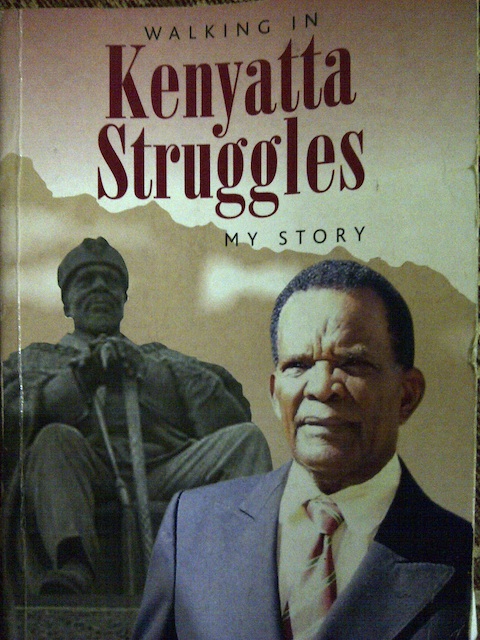
Duncan Ndegwa is a former head of the Kenyan Civil Service and Governor of the Central Bank. He published his autobiography Walking in Kenyatta Struggles in 2006.

It’s a tale of history of Kenya, struggle for independence, nation building versus devolution, disengaging Asians from commerce & Europeans from Government while Africanizing the civil service, reigning in unrealistic expectations of newly independent leaders etc. In it, some leaders like Odinga Oginga, Gikonyo Kiano, and Charles Njonjo don’t come out positively and there are a whole lost of personality stories that you won't believe.. There are more biographies and books - some thin on the money talk, and they will be reviewed in a slate condensed format in a continuing series.

Reigning in budgets & spending
- Ndegwa argues that the uncontrolled government spending was the disease that crippled Kenya in the 1980’s leading to paralysis in the early 1990’s (444). (Earlier), Kenyatta supported a balanced budget and gave strict instructions to permanent secretaries - if you over-spend, you will be the first to go (485)
- Britain gave Kenya a 60 million pound golden handshake at independence But 12M went to settlement schemes, 13M to pensions of expatriates, 10M to technical assistance, and the balance to the military (312)
-The coffee boom of the 1970’s enable the government to buy embassy properties in New York, Washington & London, and aircraft for East African Airways (494)
- Devaluation of the British pound in 1967 had an impact on all the East African whose currencies were pegged to the pound (478). The government also had to come up other measures forex such as discouraging luxury imports when the country reserves dwindled after the oil crisis (470)
- Some foreign companies were borrowing all their working capital in Kenya, while repatriating all their profits abroad (476)
- Ndegwa came up with a blueprint for the government in 1962 that he called the Kazi plan that emphasized labour intensive schemes (Page 240)
- He proposed that Kenya print her own currency and manufacture bullets (simple technological processes that would save foreign currency) but both projects were shot down by President Moi on advice of Njonjo (461)

Africans in Business: - The Crown Land Ordinance of 1915 deprived Africans of land ownership . in the 1960’s Africans were allowed to grow coffee under a (government) Swynnerton plan that also included issuance of free title deeds (232)
- Njenga Karume was one of the first Africans to be allowed to own a chequebook (472)
- Ndegwa chaired the commission that allowed civil servants to engage in private business and own property like any other citizen(497). He maintained that the greatest danger the civil service faced was pressure from politicians (500)

East African affairs: - Kenya sought military assistance from Uganda & Tanzania to send troops to Somalia which also refused to cease hostilities in cross-border matters (352)
- Britain offered Kenya as a second home for Jewish settlements, but people like Delamere kept Kenya from becoming a Jewish settlement ( 368)
- The Kenya Attorney General appeared determined to sabotage the East African community (401)

Eccentric Cabinet & Ministers: - Presidents should not be shown the central bank vaults - Kenyatta saw the CBK’s and shooed away his security men so they would not be tempted (460) while Uganda's Amin demanded that their vault money be put into circulation - over-riding the advice of his governor who paid with his life (471)
- Was Odinga really a Marxist? Up till the 1960’s he was a struggling capitalist trying to build a viable trading company (363)
- Mwai Kibaki & Munyua Waiyaki kept out of full cabinet positions until they moved away from Tom Mboya (376). Earlier, Kibaki & Mboya came up with a highly respected development blueprint for the country.
- The Finance Minister missed the opening ceremony of the Central Bank (282) and later denied that he had a drinking problem (43)

Monday, March 01, 2010

Kenya Bank Rankings 1968 Edition

From reading a 1968 book Who Controls Industry in Kenya - a report of a working party comes some history of the Kenyan banking sector. It mentions that in 1968;

- Kenya had 10 banks and all but 3 banks were foreign bank off shoots.
- They had given loans of loans of £70m, deposits of £83m – a book ratio of 83% - compared to US or US which had rations of between 33% to 50%
- Depositors received 3-4% interest on deposits, and paid interest of 7-8% on loans [today deposit rates are about the same but loan borrowers pay 12 - 25%]

There were two tiers of banks then;

The Big 3 Banks which 3 held 80% of deposits and 85% of bank assets amounting to K£111 million in 1966 were
- Barclays Bank – had assets of UK£1.4 billion and had 83 branches, and Kenyan directors included Michael Blundell, S. Waruhiu and J. Opembe. Today it has 111 branches
- Nation & Grindlays (now KCB) had assets of UK £401 million and after tax profit of £1.2 million. It had 50 branches, and 16 directors who were all British. Today KCB has 165 outlets in Kenya
_ Standard Bank (now Standard Chartered) with assets of UK £892 million and a net profit of £3.1 million. It had 41 offices, 22 directors all British.

Next 7 Banks
- Bank of Baroda
- Ottoman bank
- Bank of India
- African Banking Corporation (subsidiary of standard bank)
- Commercial bank of Africa
- Algemene bank (General Bank of Netherlands)
- Habib bank

Other institutions
- Cooperative Bank of Kenya (established in 1967)
- National Bank of Kenya (established in 1968)

Finance houses
- Big 3 (licensed as banks)

- National industrial credit (then 40% owned by Standard Bank, now NIC)
- United Dominions Corporation
- Credit finance company (now CFCStanbic)

Others registered as ordinary companies
- Transaction finance corporation (subsidiary of cooper motor corporation CMC)
- Industrial promotion services (Now IPS, was est. in 1963 by the Aga Khan)
- Africindo industrial development (powerful Asian industrialists seeking credit facilities for exports o India with training for Kenyans there)

Development corporations
The big 3 commercial banks also owned development corporations to undertake longer-term investments than normal banks accepted; these were Barleys Overseas Development [assets of B£9m and 88 projects in east Africa], National & Grindalys Finance and Development [B£3m] and Standard Bank Development Corporation

Building societies
As at 1964 they had loaned k£3m more than they had in deposits; this was after sudden withdrawal in 1959 of £4m savings by European and Asian depositors
- Savings & loan society
- East African building society
- First permanent (east Africa)
- Kenya building society (subsidiary of commonwealth development corporation CDC)
- housing finance company of Kenya (now Housing Finance)

LinkWithin

Related Posts with Thumbnails